
I was intimidated by spring rolls for the longest time. The first time I attempted them, I tore through half a package of rice papers trying to get the rolling technique right. My kitchen looked like a rice paper graveyard, and I was convinced I’d never master these delicate little parcels.
But here’s the thing about Vietnamese spring rolls – they’re actually pretty forgiving once you get the hang of the rice paper. And honestly, they’ve become one of my go-to recipes when I want something fresh and light but still satisfying. My kids call them “salad burritos” and always ask for extra peanut sauce.
These aren’t your typical fried spring rolls. Vietnamese goi cuon are served fresh and cold, wrapped in translucent rice paper with herbs, vegetables, and usually shrimp or pork. They’re like eating a garden, but in the best possible way.
What Vietnamese Spring Rolls Are For
Think of these as the perfect warm-weather meal. They’re refreshing without being boring, and you can prep most of the components ahead of time. I make them when it’s too hot to cook, when I need something healthy that doesn’t feel like I’m punishing myself, or when I want to use up herbs before they go bad.
They’re also fantastic for entertaining because people can assemble their own. I just set out bowls of fillings and let everyone go wild. Kids love the hands-on aspect, and adults appreciate how light they feel.
Vietnamese spring rolls work as an appetizer, light lunch, or dinner paired with soup. The peanut dipping sauce is crucial – don’t skip it.
Storage and Make-Ahead Tips
Fresh spring rolls are best eaten the day you make them, but you can prep components ahead of time. Keep the rice papers, cooked shrimp, herbs, and vegetables separate until ready to assemble.
If you must store assembled rolls, wrap each one individually in damp paper towels and keep them in an airtight container in the fridge for up to 24 hours. The rice paper will firm up in the cold, so let them come to room temperature before serving.
The peanut sauce keeps in the fridge for up to a week and actually tastes better after the flavors meld.
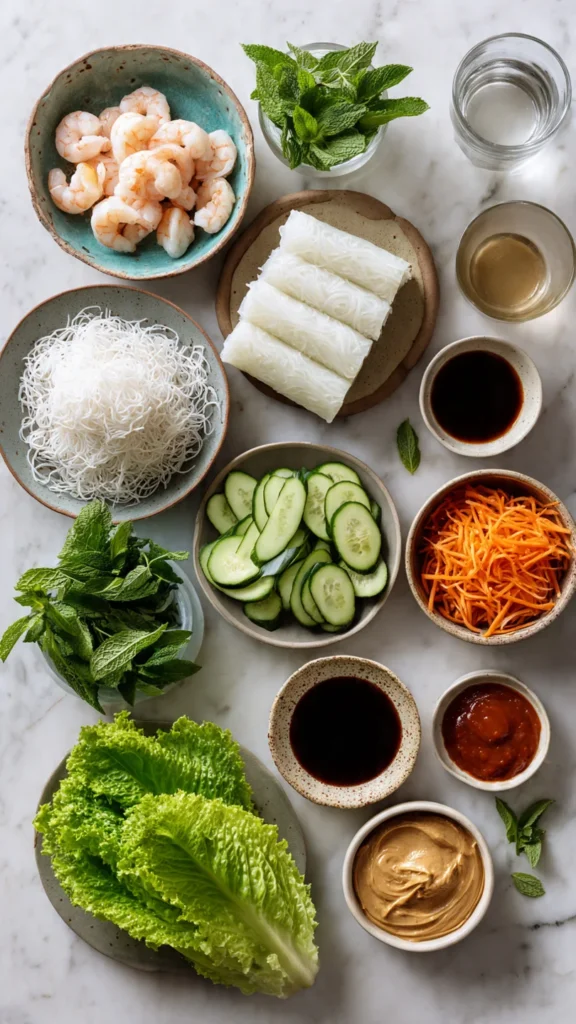
Ingredients
For the Spring Rolls:
- 12 rice paper rounds (22cm/8-9 inch diameter)
- 12 medium cooked shrimp, peeled and halved lengthwise
- 2 ounces rice vermicelli noodles
- 1 large cucumber, julienned
- 1 large carrot, julienned
- 1 cup fresh mint leaves
- 1 cup fresh cilantro
- 1/2 cup fresh Thai basil (regular basil works)
- 12 large lettuce leaves (Boston or butter lettuce)
For the Peanut Dipping Sauce:
- 1/3 cup creamy peanut butter
- 2 tablespoons hoisin sauce
- 1 tablespoon rice vinegar
- 1 teaspoon soy sauce
- 1 teaspoon sesame oil
- 1-2 teaspoons sriracha (to taste)
- 2-3 tablespoons warm water
- 1 garlic clove, minced
- 1 tablespoon crushed peanuts for garnish
Instructions
1- Prep the noodles. Cook rice vermicelli according to package directions. Usually this means soaking in hot water for 3-5 minutes until tender. Drain and rinse with cold water. Set aside.
2- Make the peanut sauce. Whisk together peanut butter, hoisin sauce, rice vinegar, soy sauce, sesame oil, sriracha, and minced garlic. Add warm water gradually until you get a consistency that’s thick but pourable. Taste and adjust – you might want more sriracha or a touch more hoisin. Set aside.
3- Prep your assembly station. Fill a large shallow dish or pie plate with warm water. Lay out all your fillings in separate bowls. Trust me on this – having everything ready makes the rolling so much easier.
4- Soften the rice paper. Dip one rice paper in the warm water for about 10-15 seconds until it starts to soften but still has some firmness. Don’t let it get too soft or it’ll tear. Lay it flat on a clean, damp kitchen towel.
5- Add the fillings. Place a lettuce leaf in the center of the bottom third of the rice paper. Add a small handful of noodles on top, then 2 shrimp halves (cut side down so they show through the wrapper), a few pieces of cucumber and carrot, and several herb leaves. Don’t overfill – I learned this the hard way.
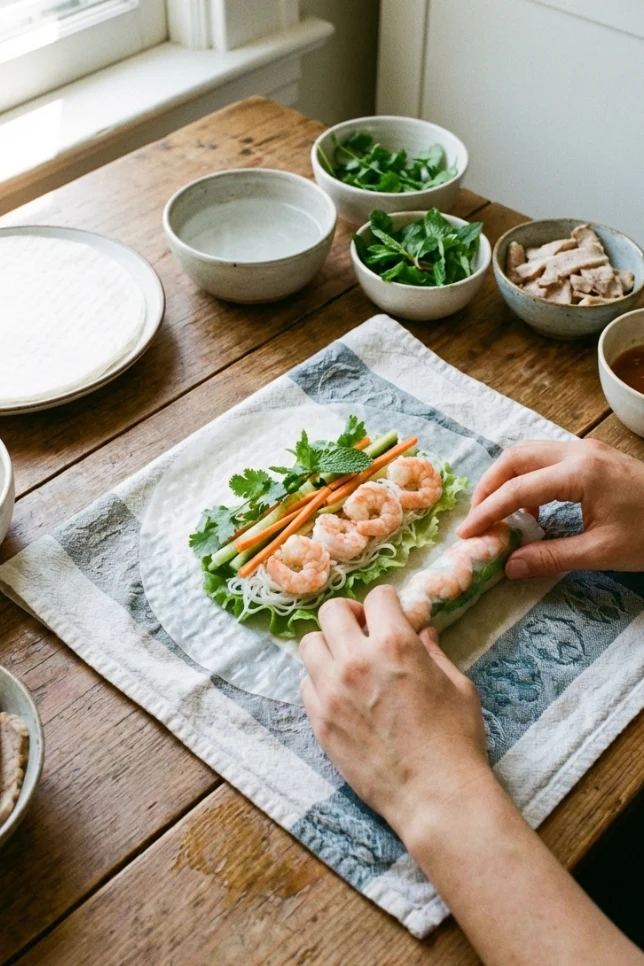
6- Roll it up. Fold the bottom edge over the fillings, then fold in the sides. Roll tightly but gently toward the top edge. The rice paper will stick to itself. Place seam-side down on a platter.
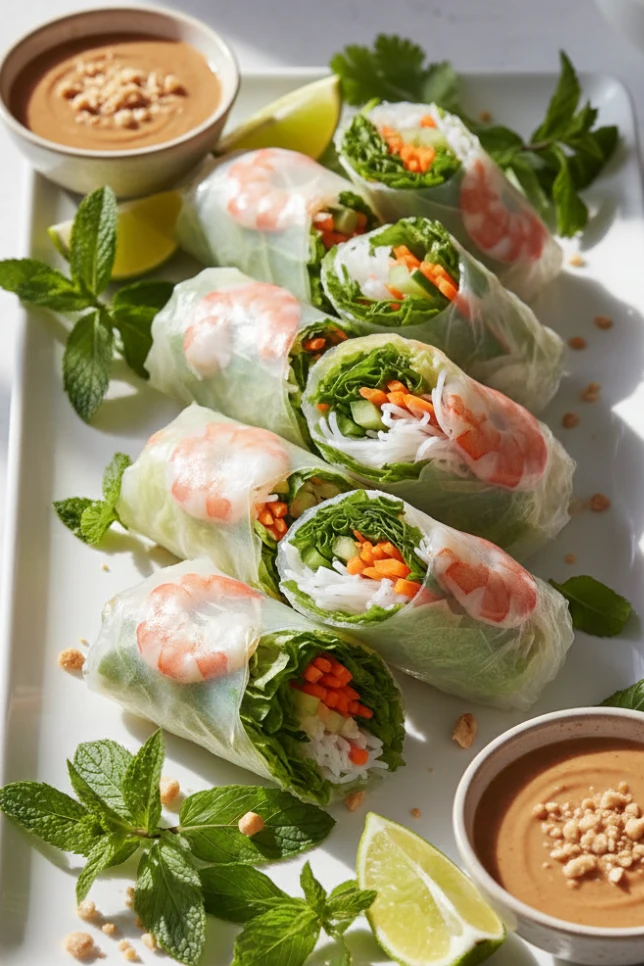
7- Repeat and serve. Continue with remaining ingredients. Cover finished rolls with a damp towel to prevent drying out. Serve immediately with peanut sauce and crushed peanuts.
Kitchen Notes
The rice paper takes practice. If you tear one (and you probably will), don’t stress. Just start over with a new sheet. I keep extra rice papers on hand because accidents happen.
Room temperature water works better than hot water for soaking. Hot water makes the papers too soft too quickly.
Don’t roll these too far in advance. The rice paper gets chewy and the vegetables release moisture. If you must prep ahead, assemble everything except the actual rolling, then wrap right before serving.
Thai basil has a slightly different flavor than regular basil – more anise-like. But honestly, use what you can find. The combination of mint and cilantro is more important.
For the peanut sauce, natural peanut butter works best. The oil separation actually helps create a smoother sauce. If you’re using regular peanut butter, you might need a bit less liquid.
Recipe Variations
Protein options: Try grilled pork, chicken, tofu, or crab instead of shrimp. Even leftover rotisserie chicken works great.
Vegetable additions: Thinly sliced bell peppers, bean sprouts, or avocado are all delicious. Just keep the pieces small and manageable.
Herb substitutions: Can’t find Thai basil? Use regular basil. No mint? Try fresh dill. The herbs are what make these rolls special, so don’t skip them entirely.
Make it spicy: Add thin slices of jalapeño or a few drops of chili oil to the filling.
This article is part of our comprehensive guide on Asian Cuisine. For more fresh Vietnamese flavors, check out our Vietnamese Pho Ga and Vietnamese Banh Mi Sandwich recipes.
Looking for more Asian appetizers? Try our Chinese Dumplings or Japanese Onigiri for different but equally satisfying handheld options.
Vietnamese Spring Rolls (Goi Cuon)
Fresh rolls with herbs, shrimp, and rice noodles
Ingredients
For the Spring Rolls:
- 12 rice paper rounds (22cm/8-9 inch diameter)
- 12 medium cooked shrimp, peeled and halved lengthwise
- 2 ounces rice vermicelli noodles
- 1 large cucumber, julienned
- 1 large carrot, julienned
- 1 cup fresh mint leaves
- 1 cup fresh cilantro
- 1/2 cup fresh Thai basil (regular basil works)
- 12 large lettuce leaves (Boston or butter lettuce)
For the Peanut Dipping Sauce:
- 1/3 cup creamy peanut butter
- 2 tablespoons hoisin sauce
- 1 tablespoon rice vinegar
- 1 teaspoon soy sauce
- 1 teaspoon sesame oil
- 1-2 teaspoons sriracha (to taste)
- 2-3 tablespoons warm water
- 1 garlic clove, minced
- 1 tablespoon crushed peanuts for garnish
Instructions
- Prep the noodles. Cook rice vermicelli according to package directions. Usually this means soaking in hot water for 3-5 minutes until tender. Drain and rinse with cold water. Set aside.
- Make the peanut sauce. Whisk together peanut butter, hoisin sauce, rice vinegar, soy sauce, sesame oil, sriracha, and minced garlic. Add warm water gradually until you get a consistency that’s thick but pourable. Taste and adjust.
- Prep your assembly station. Fill a large shallow dish or pie plate with warm water. Lay out all your fillings in separate bowls. Having everything ready makes the rolling so much easier.
- Soften the rice paper. Dip one rice paper in the warm water for about 10-15 seconds until it starts to soften but still has some firmness. Don’t let it get too soft or it’ll tear. Lay it flat on a clean, damp kitchen towel.
- Add the fillings. Place a lettuce leaf in the center of the bottom third of the rice paper. Add a small handful of noodles on top, then 2 shrimp halves (cut side down so they show through the wrapper), a few pieces of cucumber and carrot, and several herb leaves. Don’t overfill.
- Roll it up. Fold the bottom edge over the fillings, then fold in the sides. Roll tightly but gently toward the top edge. The rice paper will stick to itself. Place seam-side down on a platter.
- Serve. Continue with remaining ingredients. Cover finished rolls with a damp towel to prevent drying out. Serve immediately with peanut sauce and crushed peanuts.
Nutrition Per Serving
Kitchen Notes
Rice Paper Tips: The rice paper takes practice. If you tear one, don’t stress – just start over. Room temperature water works better than hot water for soaking.
Make-Ahead: Don’t roll these too far in advance. The rice paper gets chewy and vegetables release moisture. Assemble everything except the rolling, then wrap right before serving.
Herb Substitutions: Thai basil has a slightly anise flavor. Use regular basil if needed. The mint and cilantro combination is more important.
Storage: Best eaten fresh. If storing, wrap individually in damp paper towels and refrigerate up to 24 hours. Let come to room temperature before serving. Peanut sauce keeps for up to a week.