
The first time I ordered bibimbap at a Korean restaurant, I had no idea what I was getting into. The server brought this massive stone bowl filled with what looked like the most organized salad I’d ever seen. Everything was arranged in neat sections, and she told me to mix it all together. I remember thinking that seemed wrong, but I did it anyway.
That hot stone bowl turned everything crispy on the bottom, and the gochujang sauce tied it all together. I’ve been making versions at home ever since.
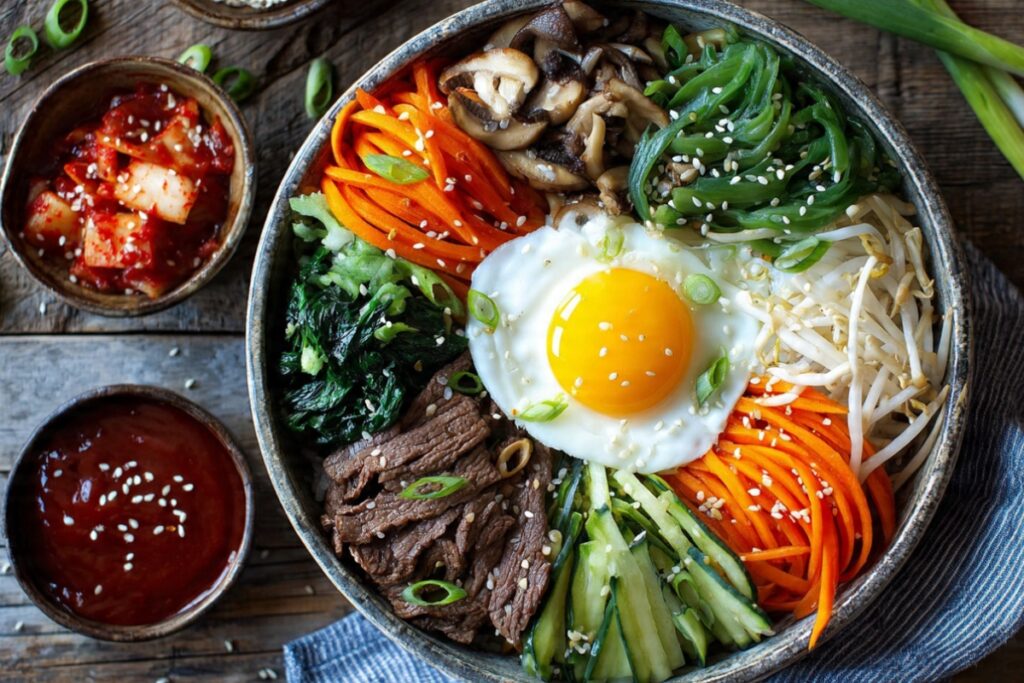
Bibimbap literally means “mixed rice” in Korean. It’s basically a rice bowl topped with seasoned vegetables, protein, a fried egg, and spicy gochujang sauce. The whole point is to mix everything together before eating.
Why This Works for Busy Weeknights
This is one of those dishes that looks fancy but uses whatever vegetables you have. I’ve made it with leftover steak, ground beef, tofu, or just vegetables. My kids love it because they can control how much gochujang they add (or completely avoid it).
It’s also great for meal prep. You can cook the rice and prep your vegetables ahead of time. Then you just reheat everything and fry an egg when you’re ready to eat.
This article is part of our comprehensive guide on Asian Cuisine. For more Korean recipes, check out our Korean Bulgogi Beef and Korean Kimchi Fried Rice.
How to Store Bibimbap Components
The nice thing about bibimbap is that you can store the components separately. Keep cooked rice in the fridge for up to 4 days. The seasoned vegetables last about 3 days in airtight containers.
I don’t recommend storing assembled bibimbap. The egg gets weird, and everything turns mushy. Just keep the parts separate and assemble when you’re ready to eat.
If you have leftover gochujang sauce, it keeps in the fridge for weeks. I use it on everything from eggs to sandwiches.
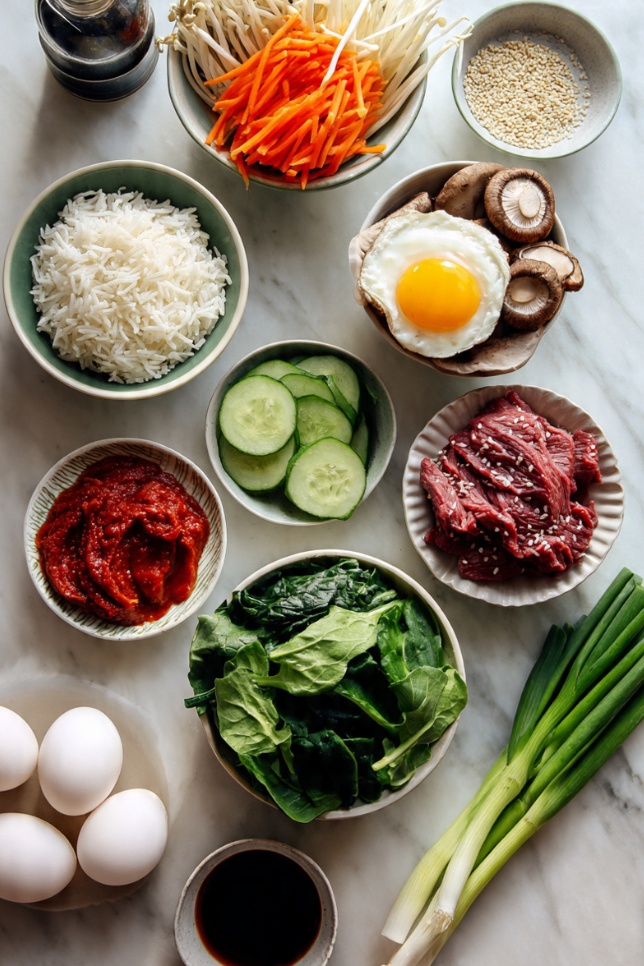
Ingredients
For the Rice:
- 2 cups short-grain white rice
- 2.5 cups water
For the Vegetables:
- 1 cup julienned carrots
- 1 cup julienned cucumber
- 1 cup fresh spinach
- 1 cup bean sprouts
- 1 cup sliced shiitake mushrooms
- 2 tablespoons sesame oil
- 2 cloves garlic, minced
- Salt to taste
For the Protein:
- 8 oz beef (ribeye or sirloin), thinly sliced
- 2 tablespoons soy sauce
- 1 tablespoon sesame oil
- 1 teaspoon sugar
- 1 clove garlic, minced
For the Gochujang Sauce:
- 3 tablespoons gochujang (Korean red pepper paste)
- 1 tablespoon sesame oil
- 1 tablespoon rice vinegar
- 1 tablespoon honey or sugar
- 1 teaspoon minced garlic
For Assembly:
- 4 eggs
- Sesame seeds for garnish
- Sliced green onions
Instructions
1. Cook the Rice
Rinse the rice until the water runs clear. Cook it according to package directions. I use a rice cooker because it’s easier, but a pot works fine too.
2. Prepare the Vegetables
Heat a large pan over medium heat. Cook each vegetable separately with a bit of sesame oil and garlic. This sounds like a pain, but it only takes about 2 minutes per vegetable.
For spinach and bean sprouts, blanch them in boiling water for 30 seconds, then drain and season with sesame oil and salt. The carrots, cucumbers, and mushrooms get stir-fried until just tender.
3. Cook the Beef
Mix the beef with soy sauce, sesame oil, sugar, and garlic. Let it sit for 10 minutes if you have time. Cook in a hot pan for 2-3 minutes until browned. Don’t overcook it or it gets chewy.
If you want to use the traditional bulgogi marinade, check out our detailed Korean Bulgogi Beef recipe for the authentic version.
4. Make the Gochujang Sauce
Whisk together gochujang, sesame oil, rice vinegar, honey, and garlic. Taste it and adjust the sweetness or heat level. I usually make extra because my family uses a lot.
5. Fry the Eggs
Heat a bit of oil in a pan and fry the eggs sunny-side up. You want the whites set but the yolk runny. That yolk mixes into everything and makes it creamy.
6. Assemble Your Bowls
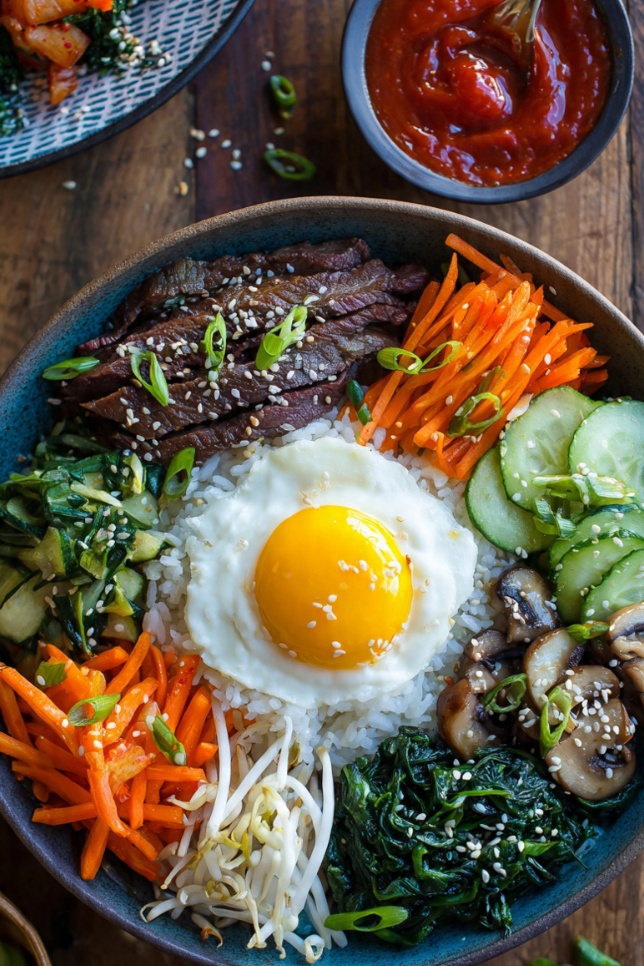
Put a big scoop of rice in each bowl. Arrange the vegetables and beef in sections on top. It looks prettier this way, but honestly, it all gets mixed together anyway.
Top with a fried egg and drizzle gochujang sauce over everything. Sprinkle with sesame seeds and green onions.
7. Mix and Eat
Use your spoon to break the egg yolk and mix everything together. The rice should get a little crispy if you’re using a hot stone bowl, but a regular bowl works fine too.
A Few Practical Notes
The traditional version uses a dolsot (hot stone bowl) that makes the rice crispy on the bottom. I bought one online for about $25, and it’s totally worth it. You heat it on the stove before adding the rice.
But honestly, a regular bowl works fine. I’ve made this in ceramic bowls, and my family still devours it.
You can swap the beef for chicken, pork, or tofu. I’ve even made it with leftover Korean Japchae noodles mixed in, and it was delicious.
The key is getting that gochujang sauce right. Start with less if you’re not used to spicy food. You can always add more, but you can’t take it away.
Korean Bibimbap Bowl
Colorful rice bowl topped with vegetables, meat, and spicy gochujang
Ingredients
For the Rice:
- 2 cups short-grain white rice
- 2.5 cups water
For the Vegetables:
- 1 cup julienned carrots
- 1 cup julienned cucumber
- 1 cup fresh spinach
- 1 cup bean sprouts
- 1 cup sliced shiitake mushrooms
- 2 tablespoons sesame oil
- 2 cloves garlic, minced
- Salt to taste
For the Protein:
- 8 oz beef (ribeye or sirloin), thinly sliced
- 2 tablespoons soy sauce
- 1 tablespoon sesame oil
- 1 teaspoon sugar
- 1 clove garlic, minced
For the Gochujang Sauce:
- 3 tablespoons gochujang (Korean red pepper paste)
- 1 tablespoon sesame oil
- 1 tablespoon rice vinegar
- 1 tablespoon honey or sugar
- 1 teaspoon minced garlic
For Assembly:
- 4 eggs
- Sesame seeds for garnish
- Sliced green onions
Instructions
- Cook the rice. Rinse the rice until the water runs clear. Cook it according to package directions. I use a rice cooker because it’s easier, but a pot works fine too.
- Prepare the vegetables. Heat a large pan over medium heat. Cook each vegetable separately with a bit of sesame oil and garlic. This sounds like a pain, but it only takes about 2 minutes per vegetable. For spinach and bean sprouts, blanch them in boiling water for 30 seconds, then drain and season with sesame oil and salt. The carrots, cucumbers, and mushrooms get stir-fried until just tender.
- Cook the beef. Mix the beef with soy sauce, sesame oil, sugar, and garlic. Let it sit for 10 minutes if you have time. Cook in a hot pan for 2-3 minutes until browned. Don’t overcook it or it gets chewy.
- Make the gochujang sauce. Whisk together gochujang, sesame oil, rice vinegar, honey, and garlic. Taste it and adjust the sweetness or heat level. I usually make extra because my family uses a lot.
- Fry the eggs. Heat a bit of oil in a pan and fry the eggs sunny-side up. You want the whites set but the yolk runny. That yolk mixes into everything and makes it creamy.
- Assemble your bowls. Put a big scoop of rice in each bowl. Arrange the vegetables and beef in sections on top. It looks prettier this way, but honestly, it all gets mixed together anyway. Top with a fried egg and drizzle gochujang sauce over everything. Sprinkle with sesame seeds and green onions.
- Mix and eat. Use your spoon to break the egg yolk and mix everything together. The rice should get a little crispy if you’re using a hot stone bowl, but a regular bowl works fine too.
Nutrition Per Serving
Kitchen Notes
Stone Bowl (Dolsot): The traditional version uses a dolsot (hot stone bowl) that makes the rice crispy on the bottom. You can buy one online for about $25. Heat it on the stove before adding the rice. A regular bowl works fine too though.
Protein Options: You can swap the beef for chicken, pork, or tofu. I’ve even made it vegetarian with just extra vegetables and it’s still delicious.
Gochujang: This Korean red pepper paste is what makes bibimbap special. Start with less if you’re not used to spicy food. You can always add more at the table.
Vegetable Flexibility: Use whatever vegetables you have. Zucchini, radish, and Korean fernbrake are also traditional. The key is having a variety of colors and textures.
Storage: Keep components separate in the fridge for up to 3 days. Don’t store assembled bibimbap as the egg gets weird. Just keep the parts separate and assemble when ready to eat.