
The first time I made pho at home, I almost gave up halfway through. The broth looked too light, the kitchen smelled incredible but I was convinced it wouldn’t actually taste like anything. I kept going anyway, and when I finally tasted it after straining and seasoning, I literally did a little victory dance right there in my kitchen. My husband walked in and thought something was wrong with me.
Pho ga is Vietnamese chicken noodle soup, and it’s honestly one of the most beautiful dishes in all of Asian cooking. The broth is clear, aromatic, and deceptively deep in flavor. It’s warm without being heavy, and the fresh herbs and silky rice noodles bring everything together in a way that feels genuinely restorative every single time you eat it.
This isn’t a quick weeknight dinner. I want to be upfront about that. But it’s also not nearly as complicated as you might think. The broth does most of the work while you’re free to do other things, and once it’s done, putting the bowls together takes about ten minutes.
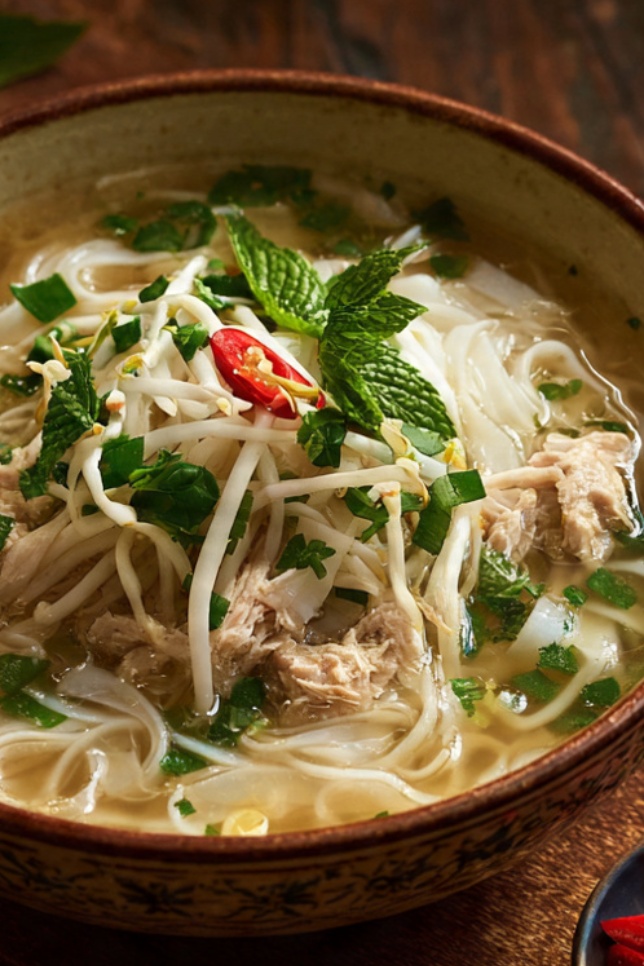
What Pho Ga Is For
Pho ga is comfort food, plain and simple. It’s the kind of soup you want when you’re feeling under the weather, when it’s cold outside, or honestly just when you need something that feels nourishing and grounding. In Vietnam, people eat it for breakfast, lunch, and dinner. There’s genuinely no wrong time for a bowl.
It’s also surprisingly versatile. You can keep things simple with just broth, noodles, and chicken, or load the bowl up with fresh herbs, bean sprouts, lime, and chili sauce until it’s overflowing. It works as a light meal or a filling one depending on how generous you are with the toppings.
How to Store Pho Ga
The broth is the real star here, and it stores beautifully. Let it cool completely before transferring to airtight containers. It’ll keep in the fridge for up to 5 days and freezes really well for up to 3 months.
Store the noodles, chicken, and toppings separately from the broth. Cooked rice noodles get mushy fast if they sit in liquid, so don’t combine them until you’re actually ready to serve.
When reheating, bring the broth back to a gentle simmer on the stovetop. The microwave works in a pinch but the stovetop gives you much better control over the temperature. You want it hot and steaming, not boiling.
Ingredients
For the Broth:
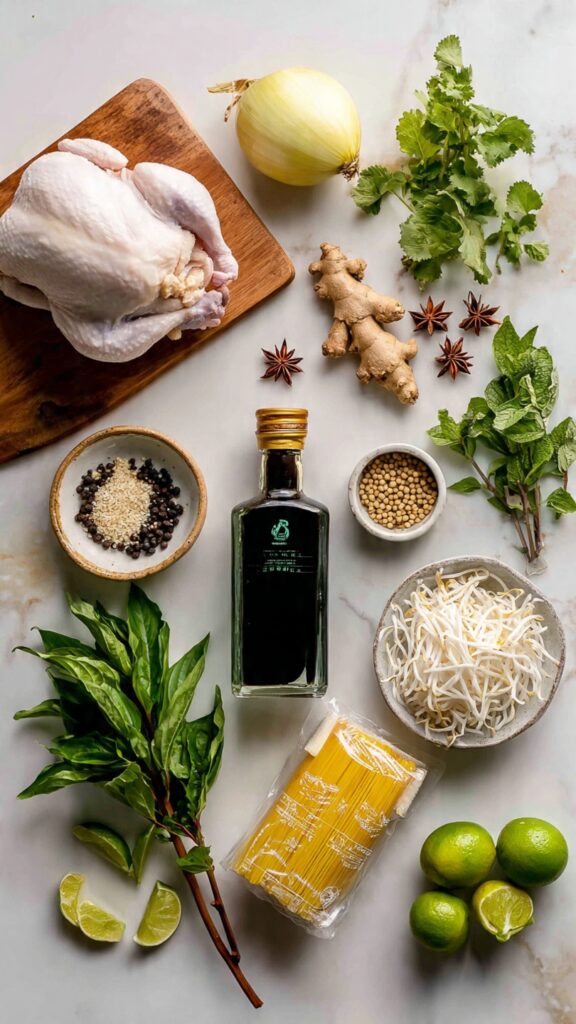
- 1 whole chicken (about 4 lbs) or 3 lbs chicken pieces (thighs and drumsticks work great)
- 10 cups water
- 1 large yellow onion, halved
- 2-inch piece of fresh ginger, halved lengthwise
- 3 star anise pods
- 1 cinnamon stick
- 4 whole cloves
- 1 tablespoon coriander seeds
- 2 tablespoons fish sauce
- 1 tablespoon sugar
- Salt to taste
For Serving:
- 12 oz dried pho noodles (banh pho)
- Fresh Thai basil
- Fresh cilantro
- Fresh mint leaves
- 1 cup bean sprouts
- 2 limes, cut into wedges
- 2-3 fresh chilies, thinly sliced
- Hoisin sauce
- Sriracha or chili sauce
Instructions
- Toast the spices. Put the star anise, cinnamon stick, cloves, and coriander seeds in a dry skillet over medium heat. Stir them around for about 2 minutes until you can smell them releasing their aroma. Don’t let them burn — they go from perfect to bitter really fast. Set them aside once they’re fragrant.
- Char the onion and ginger. Put the onion halves and ginger cut-side down in the same skillet. Cook for about 5 minutes until they’re nicely charred and dark in spots. This adds a subtle smokiness to the broth that you’ll definitely notice. You can also do this directly over a gas flame if you have one.
- Start the broth. Place the chicken in a large pot and cover with the 10 cups of water. Bring it to a boil, then immediately reduce to a gentle simmer. Skim off any foam or scum that rises to the surface during the first few minutes. This step is important for keeping your broth clear and clean-tasting.
- Add the aromatics. Drop in the charred onion, ginger, and toasted spices. Add the fish sauce and sugar. Keep everything at a gentle simmer for about 1 hour to 1 and a half hours. You don’t want a rolling boil here — that will make the broth cloudy and muddy.
- Remove and shred the chicken. Carefully lift the chicken out of the pot. Let it cool enough to handle, then pull the meat off the bones. Shred or slice the chicken into bite-sized pieces and set aside. If you want, you can return the bones to the pot and simmer for another 30 minutes to squeeze out even more flavor.
- Strain and season the broth. Pour the broth through a fine-mesh strainer into a clean pot. Discard all the solids. Taste the broth and season with salt. Add more fish sauce if it needs more depth. When it’s done right, the broth should be golden, clear, and deeply aromatic.
- Cook the noodles. Follow the package directions for your pho noodles. Usually this means soaking them in warm water for 20 to 30 minutes until they’re pliable, then cooking in boiling water for just 1 to 2 minutes. Drain and rinse with cold water right away to stop the cooking.
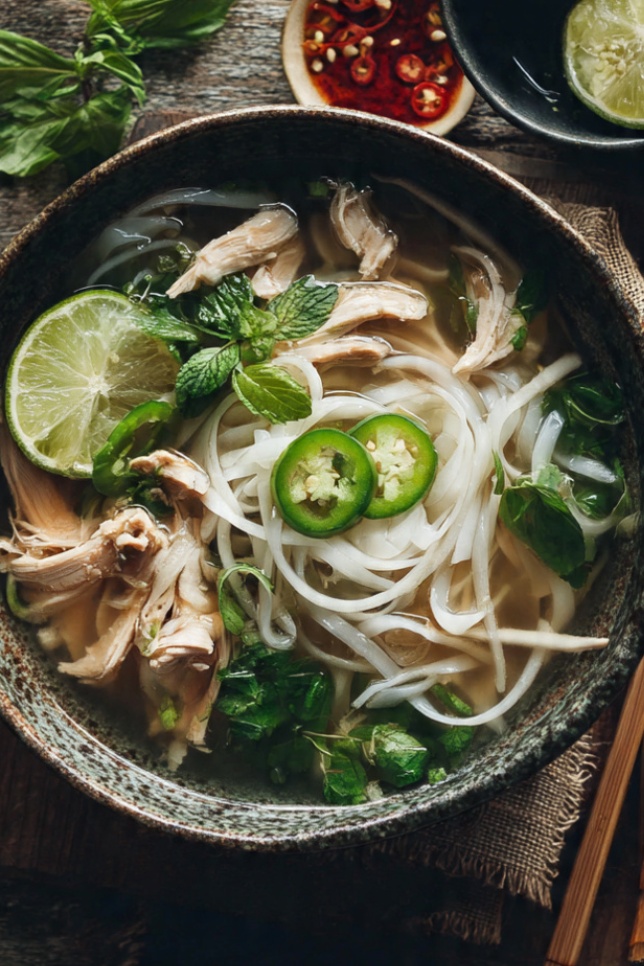
- Assemble the bowls. Divide the noodles among four bowls. Top each one with sliced chicken. Ladle the hot broth generously over everything. Serve immediately with the fresh herbs, bean sprouts, lime wedges, chilies, hoisin sauce, and sriracha on the side so everyone can customize their own bowl.
A Few Things I Learned the Hard Way
Don’t skip the charring step on the onion and ginger. It sounds like a small detail, and I actually tried skipping it once out of laziness. The difference was real and noticeable. That slight smokiness is part of what makes pho broth taste like pho broth.
If your finished broth tastes flat or one-dimensional, the fix is almost always more fish sauce and a squeeze of lime. These two ingredients can completely transform a broth that’s missing something. Add them a little at a time and taste as you go.
If you want to cut down on time, you can use a pressure cooker or Instant Pot for the broth. Cook on high pressure for about 45 minutes instead of simmering on the stovetop for over an hour. The results are pretty close, though I personally think the slow simmer produces a slightly more refined and nuanced broth. But honestly, good pho is better than no pho, so use whatever method works for your schedule.
Want to explore more Vietnamese and Asian recipes? Check out Vietnamese Banh Mi Sandwich for another Vietnamese favorite that’s perfect for weeknights. If you love warm, aromatic soups, Malaysian Laksa Soup is another incredible option with bold coconut and curry flavors. For a lighter Vietnamese dish, try Vietnamese Spring Rolls — they’re fresh, beautiful, and way easier to make than they look. And don’t forget to visit the main Asian Cuisine guide for the full collection of recipes.Share
This article is part of our comprehensive guide on Asian Cuisine: Authentic Recipes, Street Food Favorites & Traditional Dishes. For the full guide, visit the main page.
Vietnamese Pho Ga
Light and flavorful Vietnamese chicken noodle soup with a clear, aromatic broth and fresh herbs
Ingredients
For the Broth:
- 1 whole chicken (about 4 lbs) or 3 lbs chicken pieces (thighs and drumsticks work great)
- 10 cups water
- 1 large yellow onion, halved
- 2-inch piece of fresh ginger, halved lengthwise
- 3 star anise pods
- 1 cinnamon stick
- 4 whole cloves
- 1 tablespoon coriander seeds
- 2 tablespoons fish sauce
- 1 tablespoon sugar
- Salt to taste
For Serving:
- 12 oz dried pho noodles (banh pho)
- Fresh Thai basil
- Fresh cilantro
- Fresh mint leaves
- 1 cup bean sprouts
- 2 limes, cut into wedges
- 2-3 fresh chilies, thinly sliced
- Hoisin sauce
- Sriracha or chili sauce
Instructions
- Toast the spices. Put the star anise, cinnamon stick, cloves, and coriander seeds in a dry skillet over medium heat. Stir them around for about 2 minutes until you can smell them releasing their aroma. Don’t let them burn — they go from perfect to bitter really fast. Set them aside once they’re fragrant.
- Char the onion and ginger. Put the onion halves and ginger cut-side down in the same skillet. Cook for about 5 minutes until nicely charred and dark in spots. This adds a subtle smokiness to the broth that you’ll definitely notice. You can also do this directly over a gas flame if you have one.
- Start the broth. Place the chicken in a large pot and cover with the 10 cups of water. Bring it to a boil, then immediately reduce to a gentle simmer. Skim off any foam or scum that rises to the surface during the first few minutes. This step is important for keeping the broth clear and clean-tasting.
- Add the aromatics. Drop in the charred onion, ginger, and toasted spices. Add the fish sauce and sugar. Keep everything at a gentle simmer for about 1 hour to 1 and a half hours. You don’t want a rolling boil here — that will make the broth cloudy and muddy.
- Remove and shred the chicken. Carefully lift the chicken out of the pot. Let it cool enough to handle, then pull the meat off the bones and shred into bite-sized pieces. Set aside. If you want, return the bones to the pot and simmer for another 30 minutes to extract even more flavor from them.
- Strain and season the broth. Pour the broth through a fine-mesh strainer into a clean pot. Discard all the solids. Taste the broth and season with salt. Add more fish sauce if it needs more depth. When it’s done right, the broth should be golden, clear, and deeply aromatic.
- Cook the noodles. Follow the package directions for your pho noodles. Usually this means soaking them in warm water for 20 to 30 minutes until they’re pliable, then cooking in boiling water for just 1 to 2 minutes. Drain and rinse with cold water right away to stop the cooking.
- Assemble and serve. Divide the noodles among four bowls. Top each one with sliced chicken. Ladle the hot broth generously over everything. Serve immediately with fresh herbs, bean sprouts, lime wedges, chilies, hoisin sauce, and sriracha on the side so everyone can customize their own bowl.
Nutrition Per Serving
Kitchen Notes
Don’t Skip the Charring: Charring the onion and ginger adds a subtle smokiness that’s a key part of authentic pho flavor. I tried skipping it once and the difference was real. Worth the extra 5 minutes.
If the Broth Tastes Flat: The fix is almost always more fish sauce and a squeeze of lime. Add a little at a time and taste as you go. These two ingredients can completely transform a one-dimensional broth.
Pressure Cooker Shortcut: You can use an Instant Pot on high pressure for about 45 minutes instead of simmering for over an hour. The results are pretty close, though the slow simmer gives a slightly more refined broth.
Storage: Store the broth separately from the noodles and chicken. Broth keeps in the fridge for up to 5 days and freezes well for up to 3 months. Cooked noodles get mushy in liquid, so only combine everything right before serving.