
I got my first real taste of nasi goreng at a tiny warung in Bali, and it completely changed how I thought about fried rice. The version I’d been making at home for years was fine, but this was different. Smoky, sweet, layered in a way that felt almost effortless but clearly wasn’t.
Nasi goreng is Indonesia’s take on fried rice, and it’s one of those dishes that shows up everywhere, from street carts to sit-down restaurants. The name literally just means “fried rice,” but calling it that is like calling a croissant just bread. There’s a depth to it that comes from a handful of key ingredients, and one of them in particular changes everything.
The best part? It’s one of the fastest meals you can pull together, especially if you’ve got day-old rice sitting in your fridge. Most nights when I’m too tired to think of something creative, this is what I land on. It’s quick, it’s satisfying, and honestly it tastes like something you’d happily pay good money for at a restaurant.
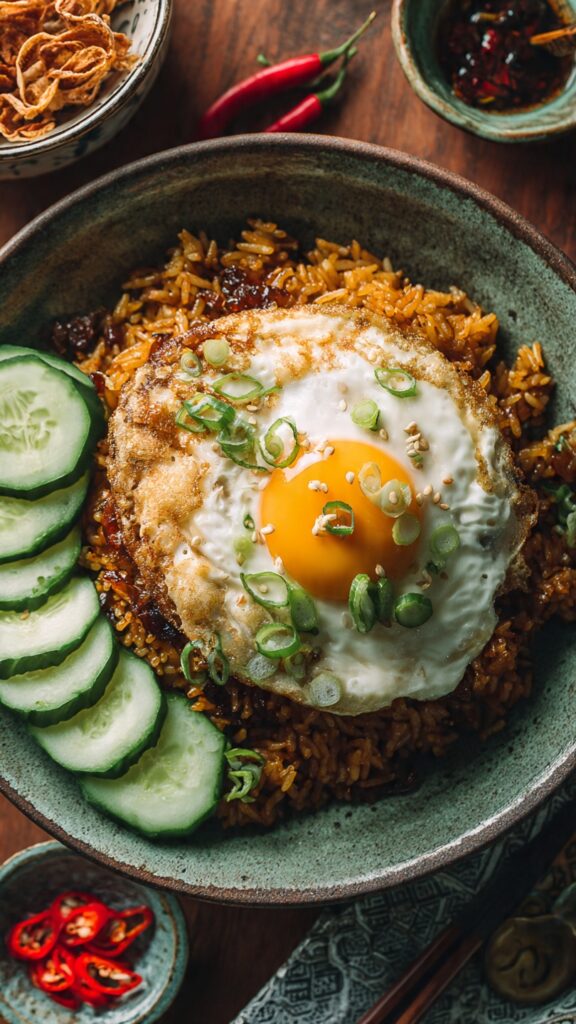
What Makes Nasi Goreng Different From Regular Fried Rice
If you’ve already made Chinese beef and broccoli at home, you know the basics of a good stir-fry. But nasi goreng has its own distinct personality, and it comes down to one ingredient above all: kecap manis.
Kecap manis is Indonesia’s thick, sweet soy sauce. It’s almost like molasses in consistency, and it gives the rice a glossy, caramelized quality that you simply can’t replicate with regular soy sauce. This is the ingredient that turns fried rice into nasi goreng. Period.
The aromatics matter too. Shallots, garlic, and fresh red chilies get minced fine and fried until they’re fragrant. Some recipes use a pre-made paste, some build it from scratch in the wok. I usually go somewhere in between. I mince everything finely and let it sizzle for about 30 seconds. That’s plenty of time to wake up the flavor.
What to Serve It With
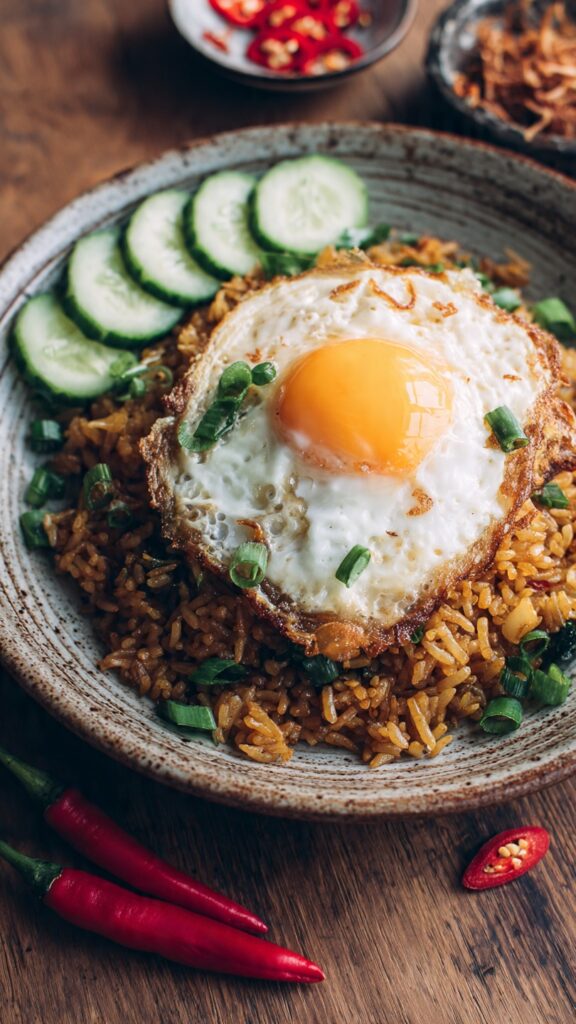
Nasi goreng is a complete meal on its own, but in Indonesia it’s almost always served with a few extras. A fried egg on top is basically non-negotiable. The crispy golden edges against the sweet, smoky rice is one of those combinations that just works every single time.
Beyond the egg, you’ll often see cucumber slices, a small pile of raw vegetables called lalapan, and sometimes a prawn cracker or two on the side. My go-to is pretty simple: the egg, sliced cucumber, and a handful of fried shallots scattered on top. No fuss, no plating gymnastics.
If you enjoy building rice bowls and layering flavors, you might also love Korean bibimbap. It’s got a completely different flavor profile but that same satisfying “everything in one bowl” energy.
How to Store Nasi Goreng
Fried rice actually reheats pretty well. Let it cool down completely, then store it in an airtight container in the fridge for up to 3 days. When you’re ready to reheat, a hot wok or skillet is the way to go. Add a small splash of oil and toss it around on high heat for a couple of minutes. You’ll get that smoky edge back.
Freezing works too, up to 2 months. Thaw it overnight in the fridge before reheating. The texture won’t be quite as good as a freshly made batch, but it’s still a solid weeknight meal.
One thing though: don’t reheat the fried egg. Always make a fresh one when you’re serving leftovers. A reheated egg just doesn’t have the same appeal, and it’s literally a 2-minute fix.
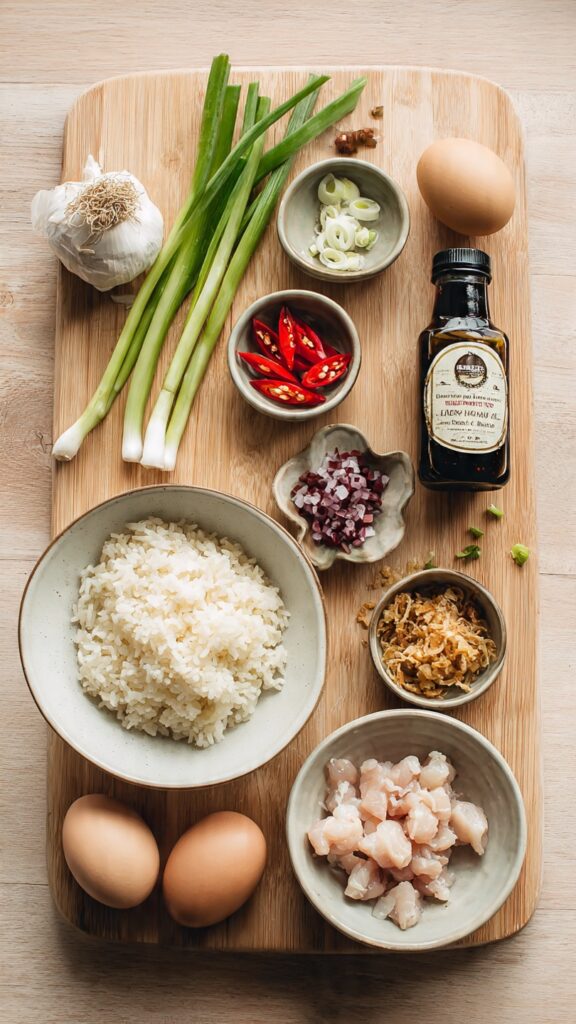
Ingredients
- 3 cups cooked jasmine rice, preferably day-old and cold
- 2 tablespoons vegetable oil
- 3 shallots, finely minced
- 4 cloves garlic, finely minced
- 2 red chilies, sliced (use 1 if you want less heat)
- 2 tablespoons kecap manis (Indonesian sweet soy sauce)
- 1 tablespoon regular soy sauce
- 1 teaspoon white pepper
- 1 cup protein of choice: diced chicken, prawns, or tofu
- 3 green onions, sliced
- Salt to taste
- 2 to 3 eggs, for frying
- Cucumber slices, for serving
- Fried shallots, for topping (optional but highly recommended)
Instructions
- If your rice is freshly cooked, spread it out on a tray and refrigerate it uncovered for a few hours or overnight. Cold, slightly dried-out rice fries up so much better than fresh rice. This is probably the single most important tip for any fried rice dish, and I learned it the hard way.
- Heat a wok or large skillet over high heat. Add 1 tablespoon of oil. Once it’s smoking, toss in your protein and cook until done through. Remove it and set it aside on a plate.
- Add another tablespoon of oil to the same pan. Throw in the shallots, garlic, and chilies. Stir-fry for about 30 seconds until it’s fragrant. Watch the garlic closely here. It goes from perfectly golden to bitter in seconds.
- Add the cold rice to the wok. Use your spatula to break up any clumps. Toss everything together on high heat for about 2 minutes. You want each grain moving and separating.
- Pour the kecap manis and soy sauce over the rice. Add the white pepper. Toss it all together until the rice is evenly coated and has that deep, glossy, caramelized color. This is the step where everything comes together.
- Add the cooked protein back into the wok. Toss for another minute to heat it through. Taste it and add salt if it needs it.
- Divide the rice between your plates. In a separate pan, fry your eggs in a bit of oil until the edges are crispy and golden. Place one egg on top of each serving.
- Finish with sliced green onions, fried shallots if you’re using them, and cucumber on the side. Serve right away.
A Couple of Things Worth Knowing
Kecap manis is the one ingredient I’d genuinely say is worth tracking down. Most Asian grocery stores carry it, and a single bottle lasts for months. If you truly can’t find it, you can fake it by simmering equal parts regular soy sauce and brown sugar until it gets thick and syrupy. It won’t be exactly the same, but it’ll get you close enough.
Day-old rice is not optional. I know it sounds like a small detail, but it makes a real difference. Fresh rice has too much moisture. It clumps, it steams, and you end up with something mushy instead of that perfectly separated, slightly crispy texture you’re going for. Cook your rice the night before and refrigerate it. Trust me on this one.
If you’re enjoying exploring Southeast Asian flavors, Malaysian laksa is another incredible dish worth trying. It’s creamy, spicy, and packed with coconut flavor. And if the stir-fry technique is growing on you, Thai pad kra pao is a fiery, herb-forward dish that’s just as fast to make.
This article is part of our comprehensive guide on Asian Cuisine. For the full guide, visit the main page.
Indonesian Nasi Goreng
Sweet, smoky fried rice topped with a crispy fried egg and green onions
Ingredients
For the Nasi Goreng:
- 3 cups cooked jasmine rice, preferably day-old and cold
- 2 tablespoons vegetable oil
- 3 shallots, finely minced
- 4 cloves garlic, finely minced
- 2 red chilies, sliced (use 1 for less heat)
- 2 tablespoons kecap manis (Indonesian sweet soy sauce)
- 1 tablespoon regular soy sauce
- 1 teaspoon white pepper
- 1 cup protein of choice: diced chicken, prawns, or tofu
- 3 green onions, sliced
- Salt to taste
For Serving:
- 2-3 eggs
- Cucumber slices
- Fried shallots for topping (optional but recommended)
Instructions
- Prep the rice. If your rice is freshly cooked, spread it on a tray and refrigerate uncovered for a few hours or overnight. Cold, slightly dried-out rice fries up so much better. This is the single most important tip for any fried rice dish.
- Cook the protein. Heat a wok or large skillet over high heat. Add 1 tablespoon of oil. Once it’s smoking, toss in your protein and cook until done through. Remove and set aside on a plate.
- Fry the aromatics. Add another tablespoon of oil to the same pan. Throw in the shallots, garlic, and chilies. Stir-fry for about 30 seconds until fragrant. Watch the garlic closely, it goes from golden to bitter fast.
- Fry the rice. Add the cold rice to the wok. Break up any clumps with your spatula. Toss everything together on high heat for about 2 minutes. You want each grain moving and separating.
- Add the sauces. Pour the kecap manis and soy sauce over the rice. Add the white pepper. Toss it all together until the rice is evenly coated and has that deep, glossy, caramelized color. This is where the magic happens.
- Combine and finish. Add the cooked protein back into the wok. Toss for another minute to heat through. Taste and add salt if it needs it.
- Fry the eggs. Divide the rice between your plates. In a separate pan, fry your eggs in a bit of oil until the edges are crispy and golden. Place one egg on top of each serving.
- Serve. Top with sliced green onions and fried shallots. Add cucumber on the side. Serve right away for the best texture and flavor.
Nutrition Per Serving
Kitchen Notes
Kecap Manis: This is the ingredient that makes nasi goreng taste like nasi goreng. Find it at any Asian grocery store. If you truly can’t track it down, simmer equal parts soy sauce and brown sugar until it thickens into a syrup. It’s not exactly the same, but it’ll get you close.
The Rice: Day-old rice is not optional. Fresh rice has too much moisture and will clump and steam instead of frying. Cook your rice the night before and refrigerate it uncovered. This makes a huge difference in the final texture.
The Egg: Always fry a fresh egg for serving, even if you’re reheating leftovers. Cook it on medium-high heat with a bit of oil until the edges are crispy and lacy. That contrast of textures is what makes the dish feel complete.
Storage: Store leftovers in an airtight container in the fridge for up to 3 days. Reheat in a hot wok with a splash of oil. Freezes well for up to 2 months. Always make a fresh egg when serving.