
The first time I tried making tempura at home was a disaster. I used regular flour, overmixed the batter until it looked like pancake mix, and ended up with heavy, chewy shrimp that tasted nothing like the delicate, crispy tempura I loved at restaurants.
That was eight years ago. Now I can whip up restaurant-quality tempura that’s so light and crispy, my kids actually prefer it to the stuff we get when we order Japanese takeout.
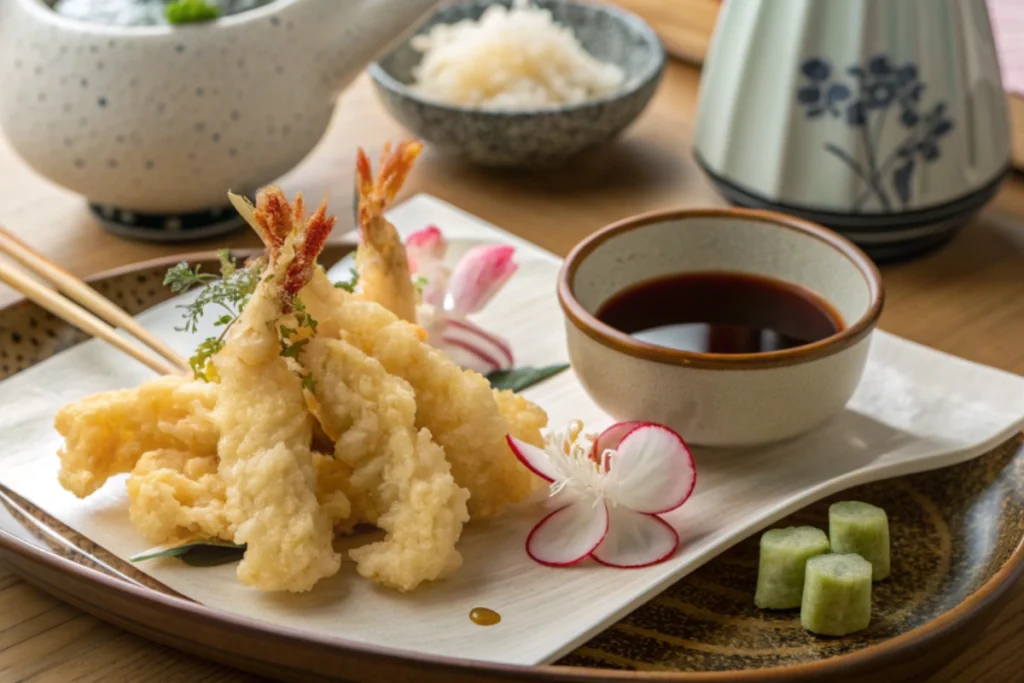
Japanese tempura is basically vegetables and seafood coated in a light, airy batter and quickly fried until golden. The key is in the batter technique and oil temperature. When done right, tempura should be almost weightless with a satisfying crunch.
What Makes Great Tempura Different
Real tempura batter is not like any other fried food batter you’ve worked with. It’s purposely lumpy and barely mixed. The goal is maximum lightness, not smoothness.
Japanese restaurants typically serve tempura as part of larger meals or as a standalone appetizer. At home, I like making it for dinner parties because you can prep everything ahead of time, then fry quickly while guests chat in the kitchen.
The most common tempura ingredients are shrimp, sweet potato, eggplant, green beans, and shishito peppers. But honestly, almost any vegetable works as long as you cut it thin enough to cook through quickly.
Storing and Serving Tips
Tempura is best eaten immediately while the coating is still crispy. If you need to keep it warm, place finished pieces on a wire rack over a baking sheet in a 200°F oven for up to 15 minutes.
Leftover tempura loses its crispness but can be reheated in a toaster oven at 375°F for about 3 minutes. It won’t be quite the same, but it’s still pretty good.
The traditional dipping sauce is tentsuyu, made with dashi, soy sauce, and mirin. I usually make a simple version with chicken broth instead of dashi since it’s easier to find.
Ingredients
For the Tempura:
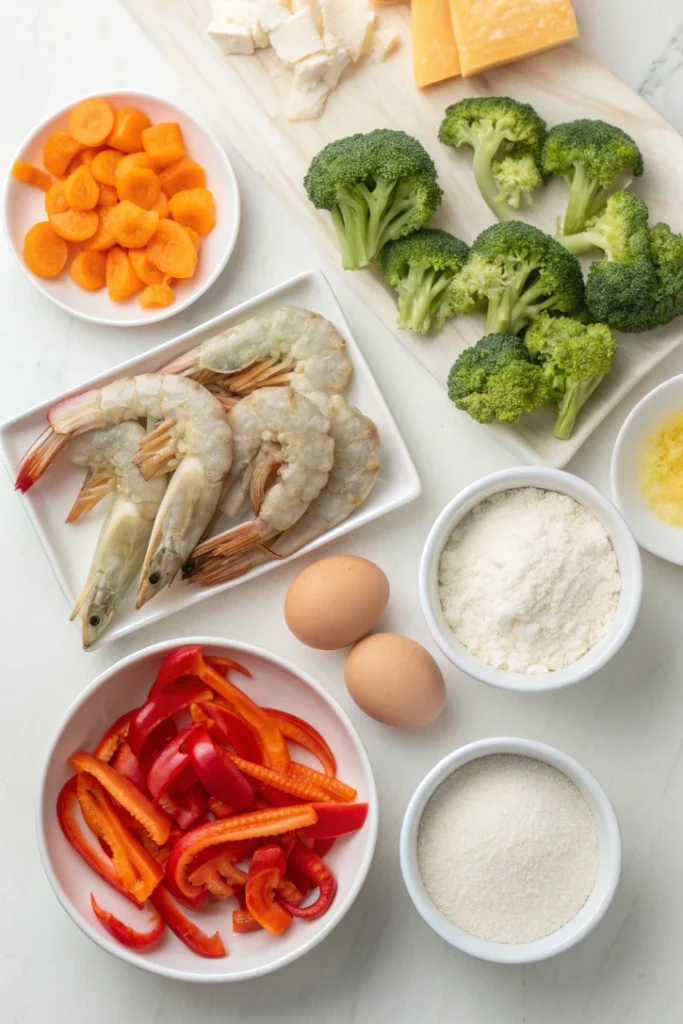
- 1 pound large shrimp, peeled and deveined
- 1 medium sweet potato, sliced into 1/4-inch rounds
- 1 small eggplant, sliced into 1/4-inch rounds
- 12 green beans, trimmed
- 8 shishito peppers (or small bell pepper strips)
For the Batter:
- 1 cup all-purpose flour, plus extra for dusting
- 1/4 cup cornstarch
- 1 large egg yolk
- 1 cup ice-cold sparkling water
- 1/2 teaspoon salt
For Frying:
- 6 cups neutral oil (vegetable or canola)
For the Dipping Sauce:
- 1/2 cup chicken broth
- 3 tablespoons soy sauce
- 2 tablespoons mirin
- 1 tablespoon rice vinegar
Instructions
- Prep your vegetables and shrimp first. Pat the shrimp completely dry and make small cuts along the belly to prevent curling. Slice vegetables evenly so they cook at the same rate.
- Heat the oil to 340°F. Use a deep, heavy pot and a thermometer. This temperature is crucial. Too hot and the outside burns before the inside cooks. Too cool and you get greasy tempura.
- Make the dipping sauce. Combine all sauce ingredients in a small saucepan and warm gently. Keep warm while you fry.
- Prepare your batter station. Put the flour and cornstarch in a large bowl. In a separate bowl, lightly beat the egg yolk, then slowly whisk in the ice-cold sparkling water and salt.
- Mix the batter barely. Pour the liquid into the flour mixture. Using chopsticks or a fork, stir just 6-8 times. The batter should be lumpy with streaks of flour visible. This is exactly what you want.
- Dust and dip. Lightly coat each piece in plain flour, shake off excess, then dip in the lumpy batter. Don’t let pieces sit in the batter.
- Fry in small batches. Add 3-4 pieces to the oil at a time. Fry for 2-3 minutes until light golden and crispy. The bubbling will slow down when they’re done.
- Drain properly. Transfer to a wire rack, not paper towels. Paper towels make the bottom soggy.
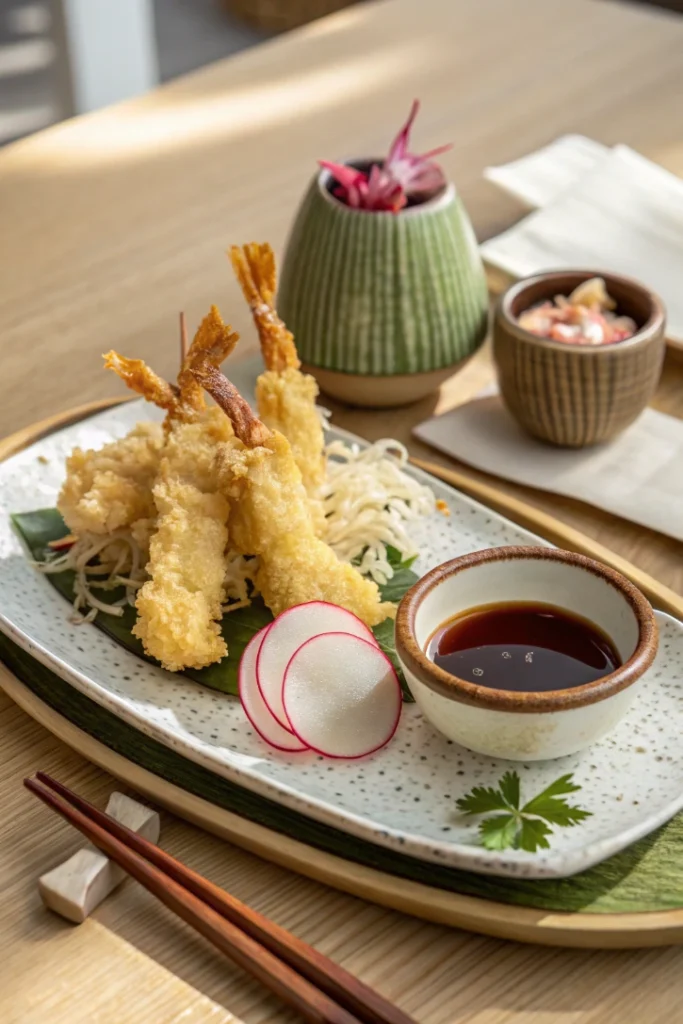
- Serve immediately. Arrange on a platter with the warm dipping sauce in small bowls.
The whole frying process takes maybe 15 minutes if you work efficiently. I like to fry the vegetables first since they take slightly longer, then finish with the shrimp.
What I’ve Learned About Tempura
Temperature control is everything. I keep a thermometer clipped to my pot and adjust the heat constantly. The oil temperature will drop when you add food, so I start slightly higher than 340°F.
Ice-cold batter makes a difference you can actually taste. I sometimes put the bowl in the freezer for a few minutes before mixing. Some people even add ice cubes directly to the batter.
Don’t make extra batter thinking you’ll save it. Fresh batter works best, and the recipe above makes just enough for this amount of food.
The sparkling water isn’t just fancy. The carbonation creates tiny air bubbles that make the coating lighter. Regular cold water works, but sparkling water works better.
If you want to get serious about tempura, this technique opens up a whole world of possibilities. I’ve made tempura-fried herbs, thin apple slices, even delicate flowers from my garden.
This recipe fits perfectly into a broader exploration of Asian cuisine, where tempura represents the Japanese approach to frying: light, clean, and focused on the ingredient rather than the coating. The technique pairs beautifully with other Japanese dishes like Japanese teriyaki salmon or Japanese ramen bowl for a complete meal.
Once you master this basic tempura method, you’ll find yourself wanting to try other Asian frying techniques. The crispy, light approach here contrasts nicely with heartier options like Chinese sweet and sour chicken or the spiced complexity of Indian samosas.
The key is understanding that each Asian cuisine approaches frying differently, and tempura represents the Japanese philosophy of letting high-quality ingredients shine through minimal, perfectly executed technique.
Japanese Tempura Platter
Light, crispy battered shrimp and vegetables in traditional Japanese style
Ingredients
For the Tempura Batter:
- 1 cup all-purpose flour
- 1/2 cup cornstarch
- 1 large egg, cold from fridge
- 1 cup ice-cold water
For the Tempura:
- 1 lb large shrimp (16-20 count), peeled with tails on
- 1 medium sweet potato, sliced into 1/4-inch rounds
- 1 small Japanese eggplant, sliced into rounds
- 1 cup broccoli florets
- 1 bell pepper, cut into strips
- 4 cups vegetable oil for frying
For Tentsuyu Dipping Sauce:
- 1/4 cup instant dashi powder
- 1 cup warm water
- 1/4 cup soy sauce
- 1/4 cup mirin
- 2 tablespoons grated daikon radish (optional)
Instructions
- Make the dipping sauce. Mix dashi powder with warm water until dissolved. Stir in soy sauce and mirin. Set aside to cool. Add grated daikon if using. This can be done ahead of time.
- Prep everything first. Cut vegetables into bite-sized pieces. Make 3-4 small shallow cuts on the underside of each shrimp to prevent curling. Pat all ingredients completely dry and keep them cold until ready to fry.
- Heat the oil. Heat oil in a heavy-bottomed pot to 340-350°F. Use a candy thermometer clipped to the side. This temperature is crucial – too hot burns the outside, too cool makes greasy tempura.
- Make the batter. In a cold bowl, whisk the egg with ice water. Add flour and cornstarch all at once. Mix only 8-10 times with chopsticks or a fork. The batter should look terrible – lumpy with streaks of flour. Don’t overmix!
- Fry the tempura. Working in small batches of 4-5 pieces, dip each piece in batter, let excess drip off for 1 second, then carefully lower into oil. Fry for 2-3 minutes until very light golden. Don’t overcrowd the pot.
- Drain and serve immediately. Remove to a wire rack or paper towels. Tempura is best eaten within minutes of frying. Serve hot with the dipping sauce on the side.
Nutrition Per Serving
Kitchen Notes
Batter Temperature: Keep everything cold. I store flour in the fridge and use ice water. Some chefs even add an ice cube directly to the batter.
Oil Safety: Never fill your pot more than halfway with oil. Have a lid nearby in case of splattering. If oil starts smoking, it’s too hot.
Vegetable Tips: Sweet potato takes longest to cook, so start with those. Harder vegetables like broccoli stems need longer than delicate items like pepper strips.
Make-Ahead: You can prep and cut vegetables hours ahead. Keep them cold and dry. The batter must be made fresh and used immediately.
Leftover Oil: Strain cooled oil through coffee filters and store in fridge. Can reuse once for tempura, then use for regular cooking.