
The first time I tried mapo tofu was at a tiny Sichuan restaurant in Chinatown, and honestly, I wasn’t prepared for the heat. My mouth was on fire, but I kept going back for more because the flavors were so incredibly complex and satisfying.
This dish became one of those recipes I had to master at home. My kids were skeptical at first about the tofu, but now they actually request it for dinner. That’s saying something.
Mapo tofu is one of those classic Sichuan dishes that looks deceptively simple but packs a serious flavor punch. The silky tofu swimming in that deep red, aromatic sauce is comfort food at its finest. It’s spicy, numbing, savory, and just a little bit sweet.
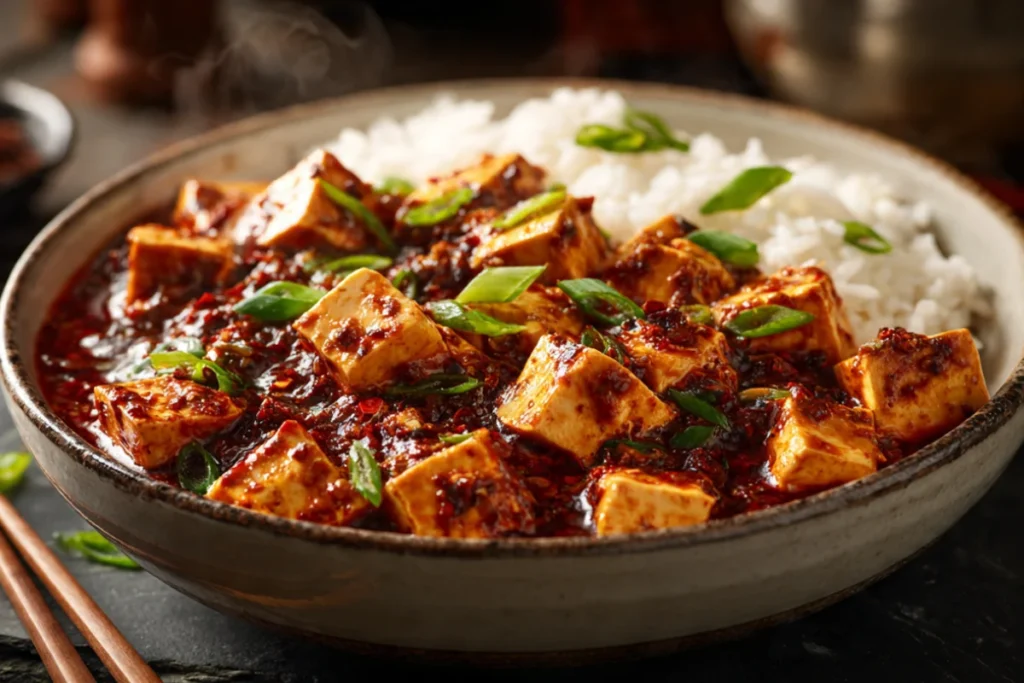
What Makes Mapo Tofu Special
This isn’t your average tofu dish. The magic happens in the sauce, which gets its depth from fermented black beans, Sichuan peppercorns, and good quality chili bean paste. The tofu soaks up all those bold flavors while staying incredibly tender.
The traditional version uses ground pork, but I’ve made it plenty of times with just mushrooms or even crumbled firm tofu for a vegetarian version. Both work beautifully.
What I love about this recipe is how quickly it comes together. Once you have your ingredients prepped, you’re looking at maybe 15 minutes of actual cooking time.
Ingredients
For the Mapo Tofu:
- 1 lb (450g) silken tofu, cut into 1-inch cubes
- 1/2 lb ground pork (or omit for vegetarian version)
- 2 tablespoons vegetable oil
- 3 tablespoons doubanjiang (fermented bean paste)
- 3 cloves garlic, minced
- 1 tablespoon fresh ginger, minced
- 1 cup chicken or vegetable stock
- 2 tablespoons soy sauce
- 1 teaspoon sugar
- 1 tablespoon cornstarch
- 2 tablespoons cool water
- 1 teaspoon ground Sichuan peppercorns
- 3-4 scallions, sliced
For Serving:
- Steamed white rice
- Extra scallions for garnish
- Additional Sichuan peppercorns if desired
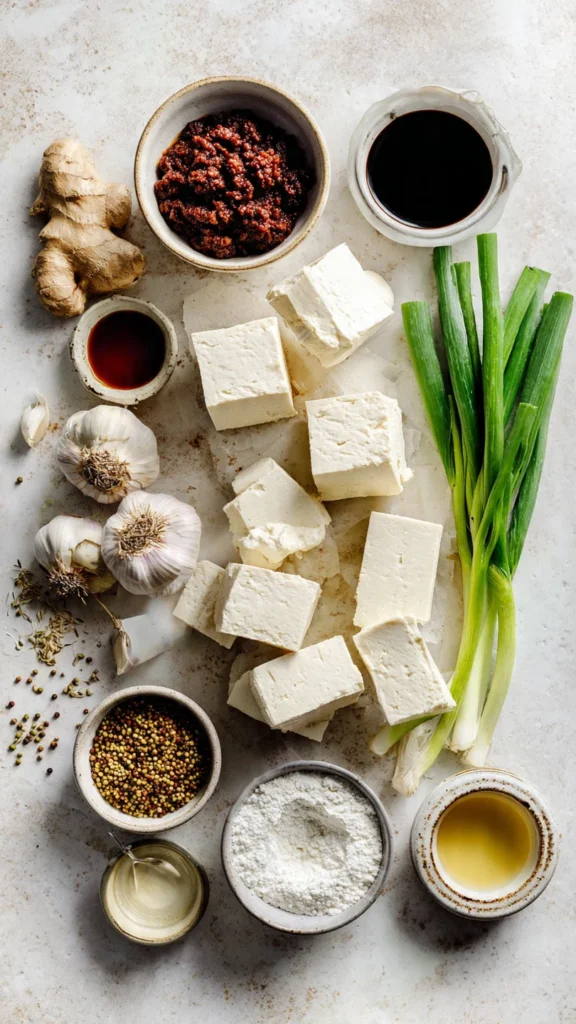
The Key Ingredients That Make It Work
Silken or soft tofu is non-negotiable here. I used to try making this with firm tofu because I thought it would hold up better, but trust me, you want that custard-like texture. It should practically melt in your mouth.
Doubanjiang (fermented bean paste) is the soul of this dish. I get mine from the Asian market, and a little jar lasts forever. Lee Kum Kee makes a good one that’s available in most grocery stores now.
Sichuan peppercorns provide that distinctive numbing sensation called “ma.” If you can’t find them, don’t stress too much, but they really do add something special. I toast mine in a dry pan for about a minute before grinding.
Ground pork adds richness, but like I mentioned, this works fine without it. I actually prefer using ground pork shoulder rather than the super lean stuff because you want that fat for flavor.
Instructions
- Prepare the tofu. Gently cut the silken tofu into 1-inch cubes. Set aside on a plate. Don’t worry if some pieces break when you’re cutting. This dish is meant to be rustic.
- Cook the pork. Heat oil in a wok or large skillet over medium-high heat. Add ground pork and cook, breaking it up with a spatula, until mostly browned, about 4-5 minutes.
- Bloom the bean paste. Push pork to one side of the pan. Add doubanjiang to the empty space and stir for 30 seconds until fragrant and the oil turns red.
- Add aromatics. Add minced garlic and ginger to the pan. Stir everything together and cook for another 30 seconds until fragrant. The smell at this point is incredible.
- Build the sauce. Pour in stock, soy sauce, and sugar. Bring to a gentle simmer and let it bubble for 2-3 minutes to meld the flavors.
- Add the tofu. Carefully slide tofu cubes into the sauce. Gently stir once or twice, then let simmer for 5 minutes without stirring to avoid breaking the tofu. The key word here is “gently.”
- Thicken the sauce. Mix cornstarch and cool water in a small bowl. Stir the slurry into the pan and cook for 1-2 minutes until sauce thickens slightly.
- Finish and serve. Remove from heat. Sprinkle with ground Sichuan peppercorns and sliced scallions. Serve immediately over steamed rice.
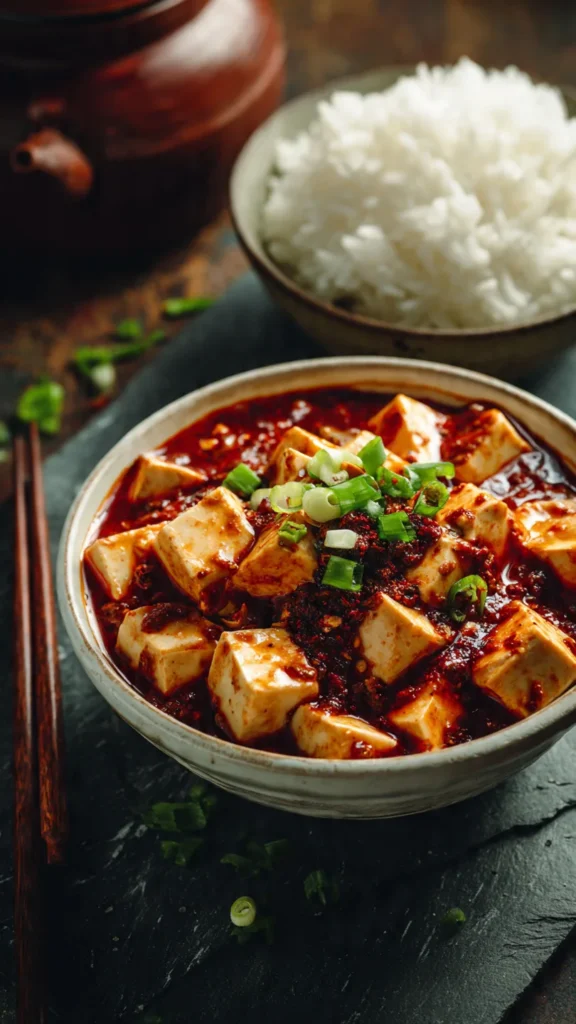
Serving and Storage
I always serve this over steamed white rice. The sauce is too good to waste, and you need something to help cool down your mouth between bites.
Mapo tofu is actually one of those dishes that tastes even better the next day. The flavors have time to meld together, and the tofu absorbs even more of that spicy sauce. I store leftovers in the fridge for up to three days.
When reheating, I add a splash of water or stock because the sauce tends to thicken up in the fridge. A minute in the microwave or a few minutes in a small saucepan on low heat brings it back to life.
Getting the Heat Level Right
Here’s what I’ve learned about adjusting the spice level. Start with less doubanjiang than you think you need. You can always add more, but you can’t take it back. I usually start with about 2 tablespoons for a mild version and work up from there.
If you accidentally make it too spicy, a spoonful of sugar and some extra stock can help tone things down. My mother-in-law taught me that trick, and it’s saved me more than once.
The Sichuan peppercorns aren’t really about heat. They’re about that unique numbing sensation. If you’re new to them, start with just a pinch. Some people love that feeling, others need time to get used to it.
Why This Dish Is Worth Making
Mapo tofu represents everything I love about Chinese cooking. It takes simple, affordable ingredients and transforms them into something extraordinary through technique and seasoning.
It’s also incredibly satisfying to make. There’s something meditative about the process, from the sizzling aromatics to watching the sauce come together. Plus, it’s one of those recipes that makes you feel like you’ve really accomplished something, even though it’s surprisingly straightforward.
This recipe is part of our comprehensive guide on Asian cuisine, where you’ll find everything from Korean bibimbap bowls to Thai green curry. If you’re exploring Sichuan flavors, you might also love our Kung Pao chicken recipe for another classic that balances heat with incredible depth.
The best part about mastering mapo tofu? Once you get comfortable with the technique, you can adapt it endlessly. I’ve made versions with mushrooms, eggplant, and even cauliflower. The sauce is the star, and it works with almost anything you want to throw at it.
Chinese Mapo Tofu
Silky tofu in spicy Sichuan chili and black bean sauce
Ingredients
For the Mapo Tofu:
- 1 lb (450g) silken tofu, cut into 1-inch cubes
- 1/2 lb ground pork (or omit for vegetarian version)
- 2 tablespoons vegetable oil
- 3 tablespoons doubanjiang (fermented bean paste)
- 3 cloves garlic, minced
- 1 tablespoon fresh ginger, minced
- 1 cup chicken or vegetable stock
- 2 tablespoons soy sauce
- 1 teaspoon sugar
- 1 tablespoon cornstarch
- 2 tablespoons cool water
- 1 teaspoon ground Sichuan peppercorns
- 3-4 scallions, sliced
For Serving:
- Steamed white rice
- Extra scallions for garnish
- Additional Sichuan peppercorns if desired
Instructions
- Prepare the tofu. Gently cut the silken tofu into 1-inch cubes. Set aside on a plate. Don’t worry if some pieces break – this dish is meant to be rustic.
- Cook the pork. Heat oil in a wok or large skillet over medium-high heat. Add ground pork and cook, breaking it up with a spatula, until mostly browned, about 4-5 minutes.
- Bloom the bean paste. Push pork to one side of the pan. Add doubanjiang to the empty space and stir for 30 seconds until fragrant and the oil turns red.
- Add aromatics. Add minced garlic and ginger to the pan. Stir everything together and cook for another 30 seconds until fragrant.
- Build the sauce. Pour in stock, soy sauce, and sugar. Bring to a gentle simmer and let it bubble for 2-3 minutes to meld the flavors.
- Add the tofu. Carefully slide tofu cubes into the sauce. Gently stir once or twice, then let simmer for 5 minutes without stirring to avoid breaking the tofu.
- Thicken the sauce. Mix cornstarch and cool water in a small bowl. Stir the slurry into the pan and cook for 1-2 minutes until sauce thickens slightly.
- Finish and serve. Remove from heat. Sprinkle with ground Sichuan peppercorns and sliced scallions. Serve immediately over steamed rice.
Nutrition Per Serving
Kitchen Notes
Doubanjiang: This fermented bean paste is essential for authentic mapo tofu. Lee Kum Kee brand is widely available, but look for brands from Sichuan for the best flavor. A little goes a long way, and it keeps for months in the fridge.
Tofu Choice: Silken tofu is non-negotiable here. The custard-like texture absorbs the sauce beautifully and provides the perfect contrast to the bold flavors. Firm tofu just won’t give you the same experience.
Sichuan Peppercorns: Toast whole peppercorns in a dry pan for 1 minute, then grind for the best flavor. If you can’t find them, the dish is still delicious without the numbing “ma” sensation.
Vegetarian Version: Simply omit the pork. You can add diced mushrooms for extra umami, or increase the doubanjiang slightly for more depth.
Storage: Keeps in the fridge for up to 3 days. The flavors actually improve overnight! Add a splash of stock when reheating as the sauce thickens. Can freeze for up to 2 months.