
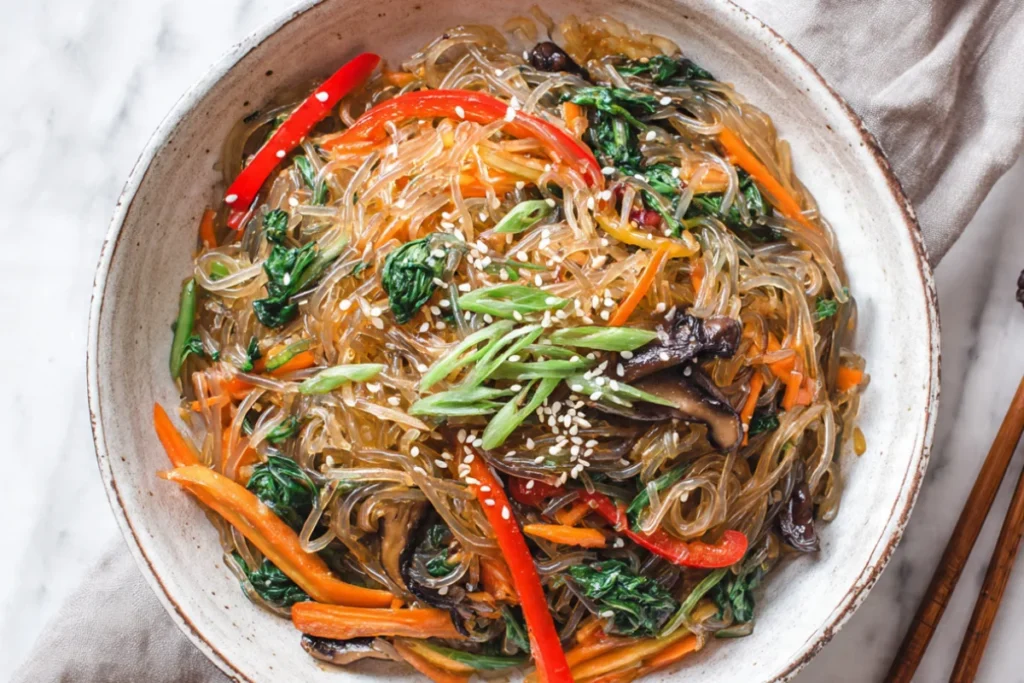
I made japchae for the first time on a random Tuesday, and honestly, I was skeptical about glass noodles. They looked weird sitting in my pantry. But after one bite of this stir-fried dish with its sweet-savory sesame flavor, I got it.
Japchae is one of those Korean dishes that looks fancy but is surprisingly doable at home. The noodles have this unique chewy texture that’s nothing like regular pasta. They soak up the soy-sesame sauce beautifully and mix with whatever vegetables you throw in.
This recipe became my go-to when I want something different from the usual weeknight rotation. My kids actually eat their vegetables when they’re mixed into japchae, which feels like a win.
What Makes Japchae Special
The star ingredient is dangmyeon, which are sweet potato starch noodles. They turn translucent when cooked and have this bouncy, almost slippery texture. You can find them at any Asian grocery store, usually labeled as “sweet potato glass noodles” or “Korean vermicelli.”
This dish works for everything from a quick lunch to a party side. Koreans traditionally serve it at celebrations, but there’s no reason to save it for special occasions. It’s just as good on a Wednesday as it is at a gathering.
You can eat japchae warm right after cooking or cold the next day. Both ways work. I’ve packed it for lunch countless times, and it actually tastes better after sitting overnight when the flavors have time to blend.
How to Store Japchae
Keep leftovers in an airtight container in the fridge for up to 4 days. The noodles might stick together a bit, but they separate easily once you reheat them.
For reheating, I add a tiny splash of water and warm it in a pan over medium heat. The microwave works too, but the pan method keeps the vegetables from getting mushy. If the noodles seem dry, drizzle in a bit of sesame oil.
Japchae doesn’t freeze well because the texture of the noodles changes. Trust me, I tried it once and regretted it.
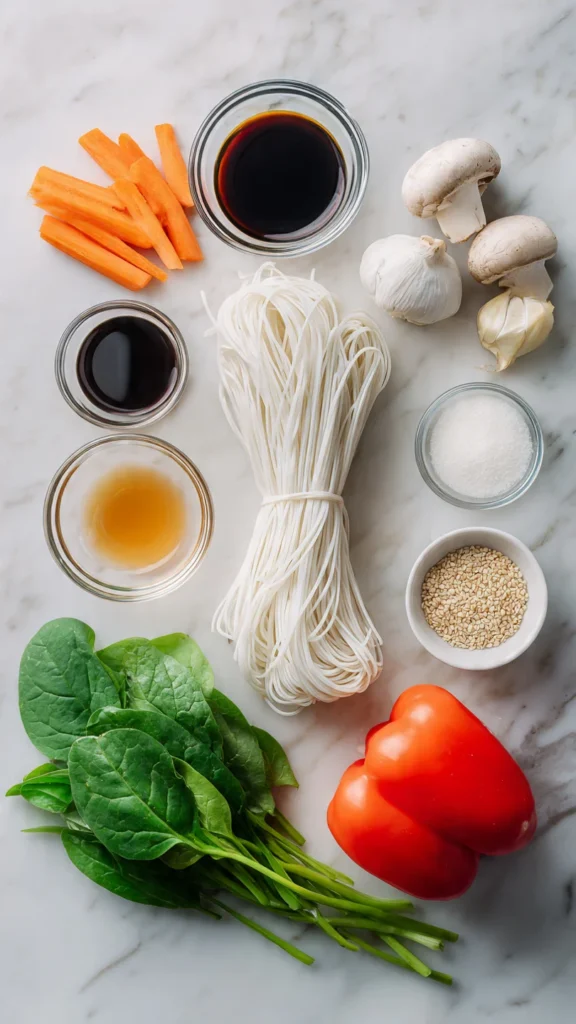
Ingredients
For the Noodles:
- 8 oz sweet potato glass noodles (dangmyeon)
- 2 tablespoons sesame oil
- 2 tablespoons soy sauce
- 1 tablespoon sugar
For the Vegetables:
- 2 tablespoons vegetable oil, divided
- 1 medium onion, thinly sliced
- 2 garlic cloves, minced
- 1 medium carrot, julienned
- 1 red bell pepper, thinly sliced
- 5 oz fresh spinach
- 4 oz shiitake mushrooms, sliced
For the Sauce:
- 3 tablespoons soy sauce
- 2 tablespoons sesame oil
- 1 tablespoon sugar
- 1/2 teaspoon black pepper
- 2 tablespoons toasted sesame seeds
Optional Add-ins:
- 8 oz beef (sirloin or ribeye), thinly sliced
- 2 eggs, beaten (for egg strips)
- Green onions for garnish
Instructions
- Cook the noodles. Bring a large pot of water to a boil. Add the glass noodles and cook for 6-7 minutes until they’re soft and translucent. Drain them and rinse under cold water. Cut them into shorter pieces with kitchen scissors (about 6-8 inches long) so they’re easier to eat. Toss with 2 tablespoons sesame oil, 2 tablespoons soy sauce, and 1 tablespoon sugar. Set aside.
- Prep the vegetables. This is one of those dishes where having everything ready before you start cooking makes life easier. Get all your vegetables sliced and measured. The actual cooking goes fast.
- Cook the spinach. Heat a large skillet or wok over medium-high heat. Add a tiny bit of oil and the spinach. Cook for about 1 minute until wilted. Transfer to a bowl and squeeze out excess water. This step prevents your japchae from getting watery.
- Stir-fry the vegetables. In the same pan, heat 1 tablespoon of vegetable oil. Add the onion and garlic, cook for 2 minutes. Toss in the carrots, bell pepper, and mushrooms. Stir-fry for 3-4 minutes until they’re tender but still have some bite. Don’t overcook them or they’ll get mushy. Transfer to a large mixing bowl.
- Make the sauce. In a small bowl, whisk together the soy sauce, sesame oil, sugar, and black pepper. The sugar balances out the saltiness of the soy sauce, so don’t skip it.
- Combine everything. Add the cooked noodles, spinach, and all the stir-fried vegetables to your large mixing bowl. Pour the sauce over everything and use tongs or your hands (once it cools a bit) to mix thoroughly. The noodles should be evenly coated and everything should be well distributed.
- Finish with sesame seeds. Sprinkle the toasted sesame seeds on top and give it one final toss. Taste it and adjust the seasoning if needed. Sometimes I add a bit more soy sauce or sesame oil depending on how it tastes.
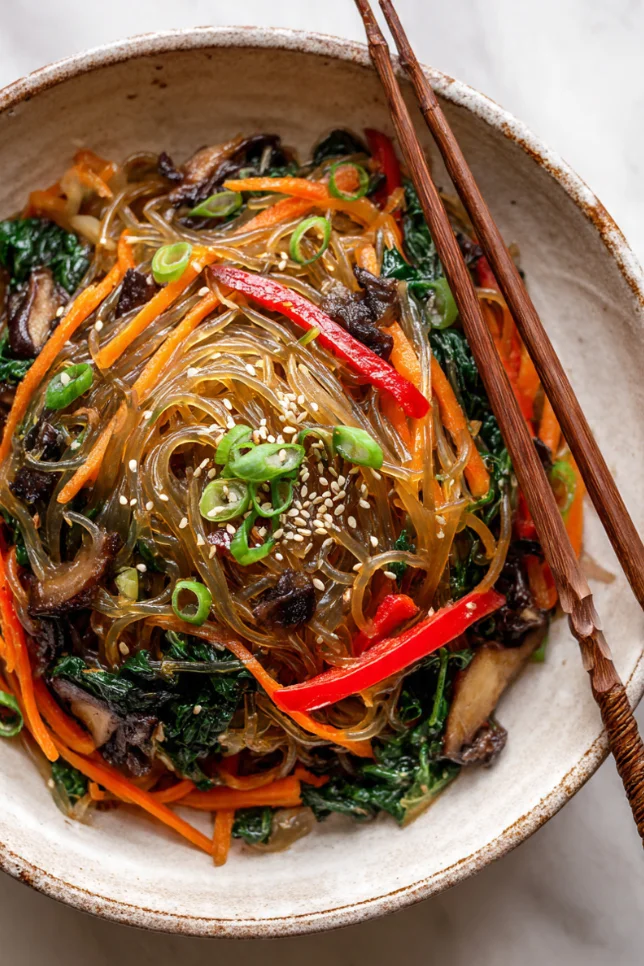
- Serve. You can serve japchae warm, at room temperature, or cold. All three ways work. Garnish with sliced green onions if you want.
Practical Notes
About the noodles: Don’t overcook them. They should be tender but still have that chewy texture. If they get too soft, they’ll turn gummy and stick together.
Protein options: If you want to add beef, marinate the sliced meat in 1 tablespoon soy sauce, 1 teaspoon sesame oil, and a pinch of sugar for 15 minutes. Stir-fry it separately before the vegetables and add it at the end. For egg strips, scramble the eggs thin like a crepe, let them cool, then slice into thin ribbons.
Vegetable substitutions: Use whatever vegetables you have. Zucchini, napa cabbage, and bean sprouts all work great. The key is to cut everything into similar-sized pieces so they cook evenly.
Make-ahead tip: You can prep all the vegetables and cook the noodles a day ahead. Just store them separately and combine everything right before serving. This makes it perfect for meal prep or when you’re having people over.
The first time you make japchae, it might seem like a lot of steps. But once you get the hang of it, the whole thing comes together in about 30 minutes. It’s one of those recipes that gets easier every time you make it.
This article is part of our comprehensive guide on Asian Cuisine. For more authentic Asian recipes, traditional cooking techniques, and regional favorites, visit our complete Asian cuisine guide.
Related recipes you might enjoy:
- Korean Bibimbap Bowl – Another colorful Korean rice dish with vegetables
- Korean Kimchi Fried Rice – Quick and spicy Korean comfort food
- Thai Pad Kra Pao – If you love stir-fries with bold flavors
- Chinese Beef and Broccoli – Classic stir-fry with a savory sauce
Korean Japchae Noodles
Stir-fried glass noodles with vegetables and sesame soy flavor
Ingredients
For the Noodles:
- 8 oz sweet potato glass noodles (dangmyeon)
- 2 tablespoons sesame oil
- 2 tablespoons soy sauce
- 1 tablespoon sugar
For the Vegetables:
- 2 tablespoons vegetable oil, divided
- 1 medium onion, thinly sliced
- 2 garlic cloves, minced
- 1 medium carrot, julienned
- 1 red bell pepper, thinly sliced
- 5 oz fresh spinach
- 4 oz shiitake mushrooms, sliced
For the Sauce:
- 3 tablespoons soy sauce
- 2 tablespoons sesame oil
- 1 tablespoon sugar
- 1/2 teaspoon black pepper
- 2 tablespoons toasted sesame seeds
Optional Add-ins:
- 8 oz beef (sirloin or ribeye), thinly sliced
- 2 eggs, beaten (for egg strips)
- Green onions for garnish
Instructions
- Cook the noodles. Bring a large pot of water to a boil. Add the glass noodles and cook for 6-7 minutes until they’re soft and translucent. Drain them and rinse under cold water. Cut them into shorter pieces with kitchen scissors (about 6-8 inches long). Toss with 2 tablespoons sesame oil, 2 tablespoons soy sauce, and 1 tablespoon sugar.
- Prep the vegetables. Get all your vegetables sliced and measured. The actual cooking goes fast, so having everything ready makes this much easier.
- Cook the spinach. Heat a large skillet or wok over medium-high heat. Add a tiny bit of oil and the spinach. Cook for about 1 minute until wilted. Transfer to a bowl and squeeze out excess water. This prevents watery japchae.
- Stir-fry the vegetables. In the same pan, heat 1 tablespoon of vegetable oil. Add the onion and garlic, cook for 2 minutes. Toss in the carrots, bell pepper, and mushrooms. Stir-fry for 3-4 minutes until tender but still crisp. Transfer to a large mixing bowl.
- Make the sauce. In a small bowl, whisk together the soy sauce, sesame oil, sugar, and black pepper. The sugar balances the saltiness.
- Combine everything. Add the cooked noodles, spinach, and all the stir-fried vegetables to your large mixing bowl. Pour the sauce over everything and mix thoroughly with tongs or your hands (once cooled). The noodles should be evenly coated.
- Finish with sesame seeds. Sprinkle the toasted sesame seeds on top and give it one final toss. Taste and adjust seasoning if needed.
- Serve. You can serve japchae warm, at room temperature, or cold. All three ways work. Garnish with sliced green onions if you want.
Nutrition Per Serving
Kitchen Notes
About the noodles: Don’t overcook them. They should be tender but still have that signature chewy texture. If they get too soft, they’ll turn gummy and stick together.
Protein options: If you want to add beef, marinate the sliced meat in 1 tablespoon soy sauce, 1 teaspoon sesame oil, and a pinch of sugar for 15 minutes. Stir-fry it separately before the vegetables and add it at the end. For egg strips, scramble the eggs thin like a crepe, let them cool, then slice into thin ribbons.
Vegetable substitutions: Use whatever vegetables you have. Zucchini, napa cabbage, and bean sprouts all work great. The key is to cut everything into similar-sized pieces so they cook evenly.
Storage: Keep leftovers in an airtight container in the fridge for up to 4 days. The noodles might stick together a bit, but they separate easily once you reheat them. Add a splash of water when reheating in a pan. Doesn’t freeze well.
Make-ahead tip: You can prep all the vegetables and cook the noodles a day ahead. Just store them separately and combine everything right before serving.