
This article is part of our comprehensive guide on Asian Cuisine. For more authentic Asian recipes and cooking tips, visit the full guide.
The first time I made dumplings from scratch, I ended up with what looked like sad little wontons that fell apart in the water. My grandmother would’ve been mortified.
But here’s what I learned after making them probably 50 times since then: dumplings are forgiving once you get the basics down. The filling is flexible, the pleating doesn’t have to be perfect, and even the ugly ones taste incredible.
Chinese dumplings (jiaozi) are one of those dishes that seem intimidating until you actually try making them. They’re basically little pockets of seasoned meat and vegetables wrapped in a thin dough. People eat them year-round in China, but they’re especially big during Chinese New Year because their shape looks like ancient Chinese money.
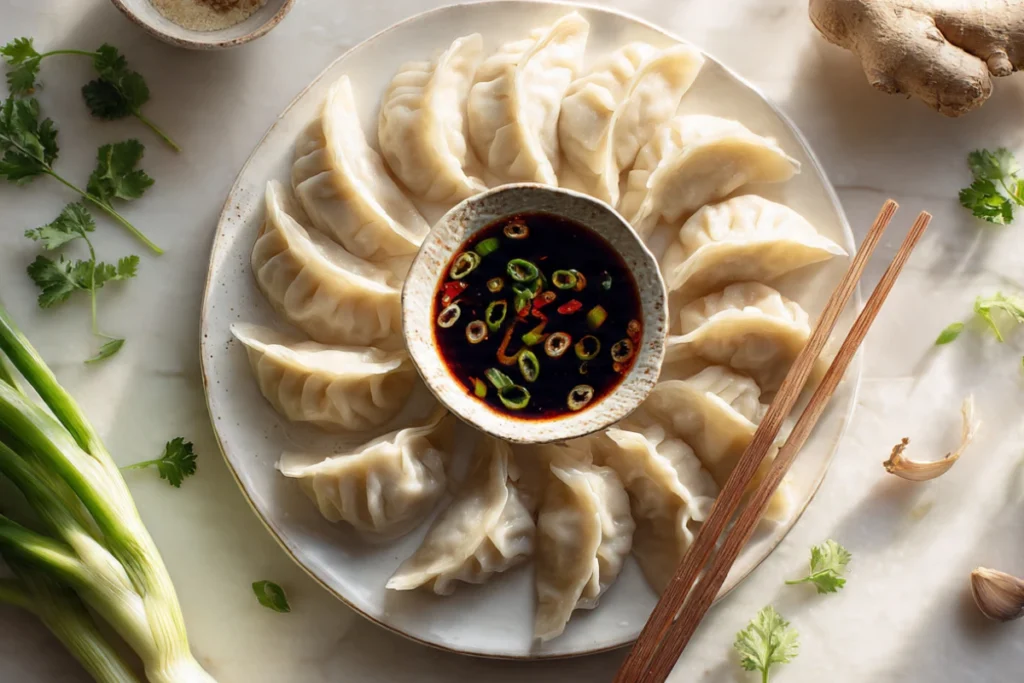
What Makes Good Dumplings
The key is getting the right balance in your filling. Too much moisture and they’ll be soggy. Not enough fat and they’ll taste dry. The pork needs to be mixed just enough that everything holds together but not so much that it gets tough.
I’ve tried making them with store-bought wrappers and homemade dough. Honestly, store-bought works fine for weeknight cooking. The homemade dough tastes better and has a chewier texture, but it adds about 45 minutes to your prep time.
The pleating is where people get hung up. You don’t need 12 perfect folds. Even 3 or 4 crimps will seal the dumpling just fine. My kids’ dumplings look like lumpy purses and they still disappear faster than I can make them.
Cooking Methods
You can boil, steam, or pan-fry these. Boiled dumplings (shui jiao) are the most traditional. They’re light and let you taste the filling clearly.
Steamed dumplings stay tender and don’t get waterlogged. Pan-fried dumplings (potstickers or guo tie) get crispy on the bottom while staying soft on top. That’s my personal favorite because you get texture contrast.
If you want to try the pan-fried method, check out our Thai Pad Kra Pao for tips on getting a good sear in a wok or skillet.
How to Store Them
Raw dumplings freeze beautifully. Just arrange them on a baking sheet so they’re not touching, freeze until solid, then transfer to a freezer bag. They’ll keep for 3 months.
Don’t thaw them before cooking. Drop frozen dumplings straight into boiling water or your steamer. They just need an extra minute or two of cooking time.
Cooked dumplings don’t store as well. They get gummy in the fridge. If you have leftovers, I usually pan-fry them the next day to crisp them up again.
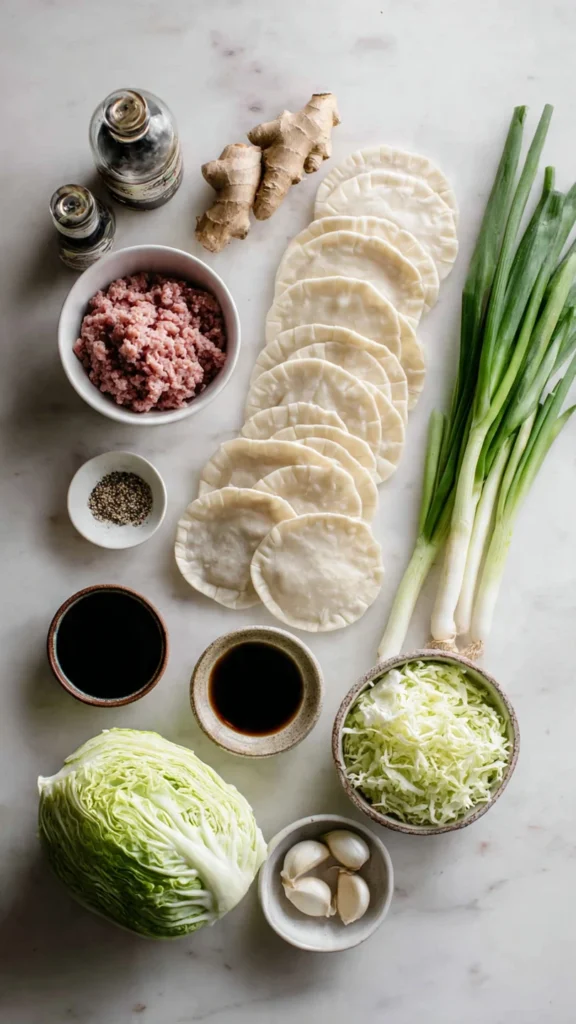
Ingredients
For the Filling:
- 1 lb ground pork (80/20 fat ratio works best)
- 2 cups napa cabbage, finely chopped
- 3 green onions, minced
- 2 tablespoons fresh ginger, grated
- 2 cloves garlic, minced
- 2 tablespoons soy sauce
- 1 tablespoon sesame oil
- 1 tablespoon Shaoxing wine (or dry sherry)
- 1 teaspoon sugar
- 1/2 teaspoon white pepper
- 1/4 teaspoon salt
For Assembly:
- 40-50 dumpling wrappers (store-bought or homemade)
- Small bowl of water for sealing
For the Dipping Sauce:
- 3 tablespoons soy sauce
- 1 tablespoon rice vinegar
- 1 teaspoon sesame oil
- 1/2 teaspoon chili oil (optional)
- Thinly sliced green onions
Instructions
- Prep the cabbage. Sprinkle the chopped cabbage with a pinch of salt and let it sit for 10 minutes. Then squeeze out as much water as you can with your hands or a clean kitchen towel. This step matters because watery filling makes soggy dumplings.
- Mix the filling. In a large bowl, combine the pork, drained cabbage, green onions, ginger, and garlic. Add the soy sauce, sesame oil, wine, sugar, white pepper, and salt. Stir everything in one direction for about 2 minutes. This helps the filling stick together.
- Set up your station. Get a small bowl of water, a clean cutting board or plate, and your wrappers. Keep the wrappers covered with a damp towel so they don’t dry out.
- Fill the dumplings. Place a wrapper in your palm. Add about 1 tablespoon of filling to the center. Don’t overfill them or they’ll burst when you cook them. Dip your finger in water and run it around the edge of the wrapper.
- Seal them up. Fold the wrapper in half to make a half-moon shape. Press the edges together, then make 3-5 pleats along one side, pressing firmly to seal. The goal is no air pockets and a tight seal. They don’t have to look perfect.
- Cook them. For boiled: Bring a large pot of water to a boil. Add dumplings in batches (don’t crowd them). When the water returns to a boil, add 1/2 cup cold water. Repeat this twice. The dumplings are done when they float and look puffy, about 6-8 minutes total.
- Make the sauce. While the dumplings cook, mix together the soy sauce, rice vinegar, sesame oil, and chili oil if using. Sprinkle with green onions.
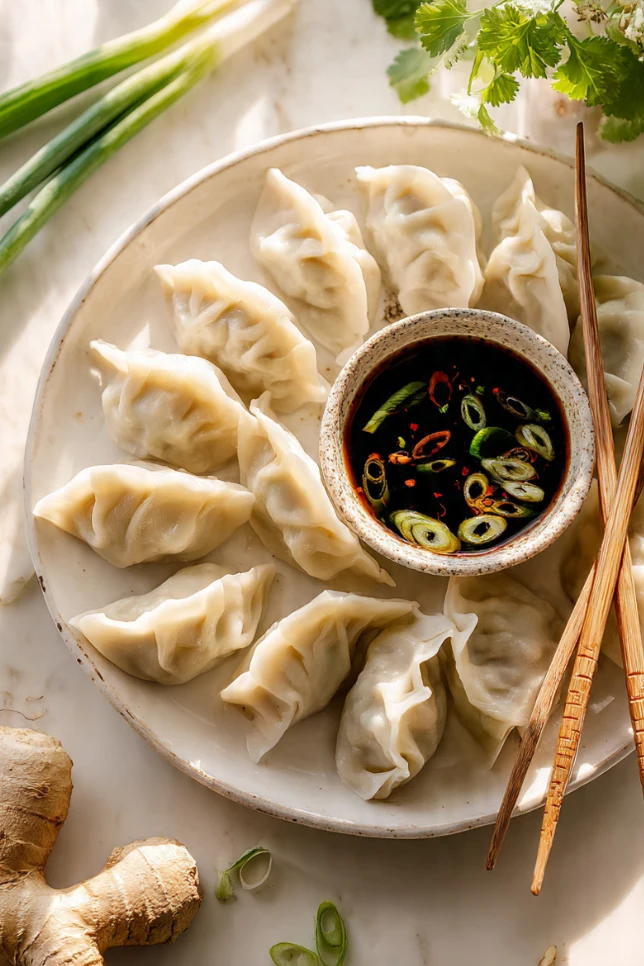
- Serve. Use a slotted spoon to transfer dumplings to a serving plate. Serve hot with the dipping sauce on the side.
A Few Things I’ve Learned
The meat mixture will look loose before you cook it. That’s normal. It firms up when it hits the heat.
If your dumplings keep opening while they boil, you’re probably not sealing the edges well enough. Really pinch them together. A little extra water on the edges helps too.
Napa cabbage is traditional, but regular cabbage works. So does bok choy. I’ve even used spinach when that’s what I had. Just make sure you squeeze out the water regardless of which vegetable you use.
The Shaoxing wine adds depth to the flavor. You can skip it if you don’t have it, but the dumplings won’t taste quite as complex. Dry sherry is a decent substitute.
For more dumpling inspiration, try our Korean Kimchi Fried Rice or Vietnamese Spring Rolls for other Asian wrapped and filled dishes.
Making dumplings takes practice. Your first batch might not look Instagram-ready. But even messy dumplings taste incredible when they’re fresh and homemade. The filling is savory and juicy, the wrapper is tender, and dipping them in that sauce makes everything better.
Once you get comfortable with the basic pork and cabbage version, you can experiment. Shrimp and chive, chicken and mushroom, or even vegetarian with tofu and vegetables all work. The technique stays the same.
Explore more authentic Asian recipes in our complete Asian Cuisine Guide, featuring everything from Japanese Ramen Bowl to Thai Green Curry Chicken.
Chinese Dumplings (Jiaozi)
Handmade dumplings filled with pork, vegetables, and ginger
Ingredients
For the Filling:
- 1 lb ground pork (80/20 fat ratio works best)
- 2 cups napa cabbage, finely chopped
- 3 green onions, minced
- 2 tablespoons fresh ginger, grated
- 2 cloves garlic, minced
- 2 tablespoons soy sauce
- 1 tablespoon sesame oil
- 1 tablespoon Shaoxing wine (or dry sherry)
- 1 teaspoon sugar
- 1/2 teaspoon white pepper
- 1/4 teaspoon salt
For Assembly:
- 40-50 dumpling wrappers (store-bought or homemade)
- Small bowl of water for sealing
For the Dipping Sauce:
- 3 tablespoons soy sauce
- 1 tablespoon rice vinegar
- 1 teaspoon sesame oil
- 1/2 teaspoon chili oil (optional)
- Thinly sliced green onions
Instructions
- Prep the cabbage. Sprinkle the chopped cabbage with a pinch of salt and let it sit for 10 minutes. Then squeeze out as much water as you can with your hands or a clean kitchen towel. This step matters because watery filling makes soggy dumplings.
- Mix the filling. In a large bowl, combine the pork, drained cabbage, green onions, ginger, and garlic. Add the soy sauce, sesame oil, wine, sugar, white pepper, and salt. Stir everything in one direction for about 2 minutes. This helps the filling stick together.
- Set up your station. Get a small bowl of water, a clean cutting board or plate, and your wrappers. Keep the wrappers covered with a damp towel so they don’t dry out.
- Fill the dumplings. Place a wrapper in your palm. Add about 1 tablespoon of filling to the center. Don’t overfill them or they’ll burst when you cook them. Dip your finger in water and run it around the edge of the wrapper.
- Seal them up. Fold the wrapper in half to make a half-moon shape. Press the edges together, then make 3-5 pleats along one side, pressing firmly to seal. The goal is no air pockets and a tight seal. They don’t have to look perfect.
- Cook them. Bring a large pot of water to a boil. Add dumplings in batches (don’t crowd them). When the water returns to a boil, add 1/2 cup cold water. Repeat this twice. The dumplings are done when they float and look puffy, about 6-8 minutes total.
- Make the sauce. While the dumplings cook, mix together the soy sauce, rice vinegar, sesame oil, and chili oil if using. Sprinkle with green onions.
- Serve. Use a slotted spoon to transfer dumplings to a serving plate. Serve hot with the dipping sauce on the side.
Nutrition Per Serving (6-8 dumplings)
Kitchen Notes
Wrapper Choice: Store-bought wrappers are perfectly fine for weeknight cooking. Look for round dumpling wrappers, not wonton wrappers (those are thinner and square). If you want to make homemade dough, it adds about 45 minutes to prep time but tastes better.
Fat Ratio Matters: Use 80/20 ground pork. Leaner pork makes dry dumplings. The fat keeps the filling juicy and flavorful.
Squeezing the Cabbage: Don’t skip this step. Excess moisture will make your dumplings watery and the wrappers will get soggy and tear.
Pan-Fried Potstickers: Heat 2 tablespoons oil in a skillet over medium-high heat. Add dumplings flat side down and cook until golden (2-3 minutes). Add 1/3 cup water, cover immediately, and steam for 5-6 minutes. Uncover and let remaining water evaporate.
Freezing: Arrange raw dumplings on a baking sheet so they’re not touching. Freeze until solid, then transfer to freezer bags. Cook from frozen, adding 1-2 extra minutes to cooking time.
Variations: Try shrimp and chive, chicken and mushroom, or vegetarian with tofu and vegetables. The technique stays the same.