
Last winter, I watched my Korean friend Mina make tteokbokki in her tiny apartment kitchen, and honestly, I was skeptical. Chewy rice cakes swimming in red sauce? It looked like something my kids would reject before even tasting.
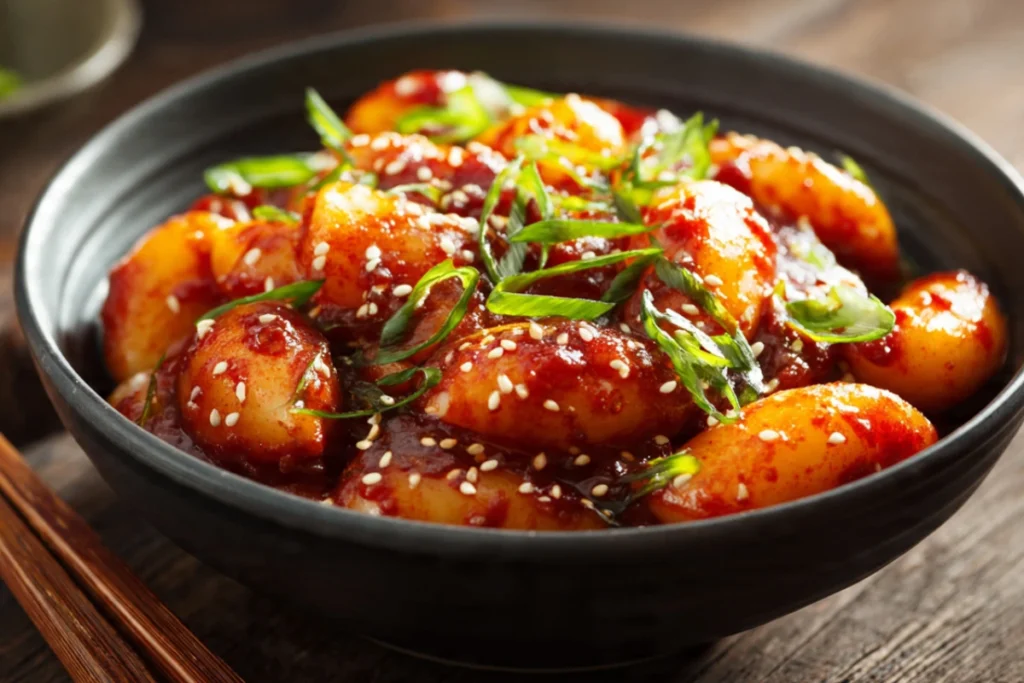
I was completely wrong. One bite of those silky, pillowy rice cakes coated in that sweet-spicy gochujang sauce and I understood why this dish is Korea’s most beloved street food.
Tteokbokki is comfort food at its finest. The rice cakes have this incredible texture that’s bouncy and satisfying, while the sauce delivers heat that builds slowly and keeps you coming back for more.
What Makes Tteokbokki Special
This isn’t just Korean mac and cheese, though that’s probably the closest comparison. Tteokbokki hits different flavor notes than anything we typically eat here.
The gochujang sauce is sweet upfront, then the heat creeps in. Not burning hot, but warm and lingering. It’s the kind of spice that makes you want another bite even when your mouth is tingling.
The rice cakes themselves are the real star. They’re called tteok, and when fresh, they’re soft and stretchy. Think of the chewiest mochi you’ve ever had, but in cylinder shapes about the size of your thumb.
Where You’ll Find the Ingredients
Most regular grocery stores won’t have what you need. I get my rice cakes from H-Mart, but any Korean market works. You can also order them online, though fresh is always better than frozen.
The gochujang is easier to find these days. Even my regular Kroger carries it in the international aisle. Get the medium heat level if you’re unsure.
Storage and Prep
Fresh rice cakes last about a week in the fridge. They get hard when cold, but that’s normal. The sauce will soften them right up.
If you buy frozen rice cakes, thaw them in cold water for about 20 minutes before cooking. Don’t use hot water or they’ll get mushy.
Ingredients
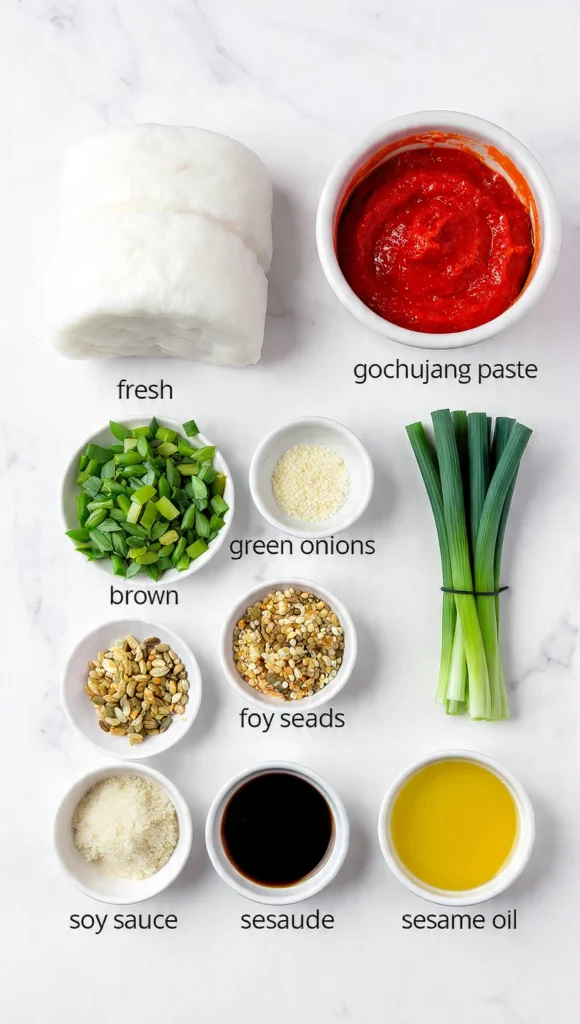
- 1 lb fresh rice cakes (or 12 oz if using frozen)
- 3 tablespoons gochujang paste
- 1 tablespoon soy sauce
- 2 tablespoons brown sugar
- 1 tablespoon corn syrup or honey
- 2 cups water or light chicken broth
- 1 tablespoon vegetable oil
- 2 green onions, chopped
- 1 tablespoon sesame oil
- 1 teaspoon sesame seeds
- Optional: fish cake slices, hard-boiled eggs, or cabbage
Instructions
- Soak the rice cakes. If using frozen rice cakes, soak them in cold water for 20 minutes until they separate easily. Fresh ones just need a quick rinse.
- Make the sauce base. In a large skillet or wok, heat the vegetable oil over medium heat. Add gochujang and stir it around for about 30 seconds until it smells toasty.
- Add liquids. Pour in the water or broth, then whisk in soy sauce, brown sugar, and corn syrup. Bring to a simmer.
- Cook the rice cakes. Add the drained rice cakes to the sauce. Let them simmer for 8-10 minutes, stirring occasionally. They should be tender but still have some chew.
- Thicken the sauce. The sauce will reduce and coat the rice cakes as they cook. If it gets too thick, add a splash more water. If too thin, cook uncovered for a few more minutes.
- Finish and serve. Turn off heat and stir in half the green onions and the sesame oil. Taste and add more gochujang if you want more heat, or sugar if it’s too spicy.
- Garnish. Sprinkle with remaining green onions and sesame seeds before serving.
What I’ve Learned Making This
The first time I made tteokbokki, I used way too much water and ended up with soup instead of saucy rice cakes. Start with less liquid than you think you need.
Fresh rice cakes make a huge difference, but frozen ones work fine if that’s what you can find. Just don’t skip the soaking step.
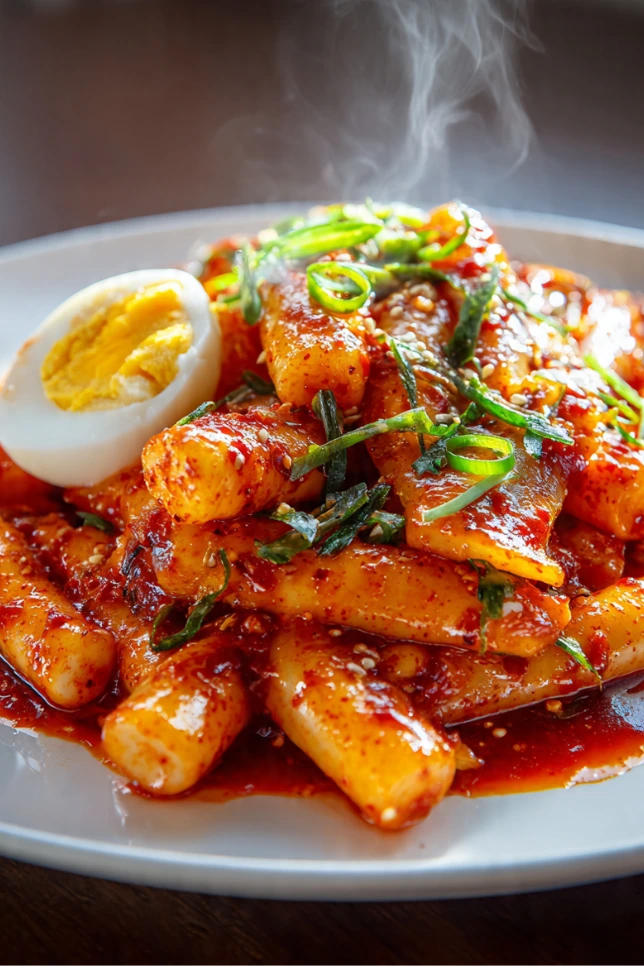
The sauce should coat the rice cakes like a glaze, not pool in the bottom of the pan. If yours is too soupy, just cook it down longer.
Some people add fish cake or hard-boiled eggs, which makes it more filling. My kids actually prefer it with some shredded cabbage mixed in, though that’s probably not traditional.
Making It Your Own
Once you nail the basic version, tteokbokki is really forgiving. I’ve added leftover vegetables, different proteins, even cheese when I’m feeling experimental.
The key is getting that balance right between sweet, spicy, and savory. If your gochujang is particularly mild, bump it up with some red pepper flakes. Too hot? More brown sugar calms it down.
This dish is meant to be eaten right away while the rice cakes are still soft and the sauce is warm. It doesn’t really keep well as leftovers, though you can reheat it with a splash of water if needed.
This recipe is part of our comprehensive Asian Cuisine guide, where you’ll find everything from Thai curries to Japanese comfort foods. For more Korean favorites, try our Korean Bibimbap Bowl or Korean Bulgogi Beef recipes.
Korean Tteokbokki
Chewy rice cakes simmered in spicy-sweet gochujang sauce
Ingredients
- 1 lb fresh rice cakes (or 12 oz if using frozen)
- 3 tablespoons gochujang paste
- 1 tablespoon soy sauce
- 2 tablespoons brown sugar
- 1 tablespoon corn syrup or honey
- 2 cups water or light chicken broth
- 1 tablespoon vegetable oil
- 2 green onions, chopped
- 1 tablespoon sesame oil
- 1 teaspoon sesame seeds
Optional Add-ins:
- Fish cake slices
- Hard-boiled eggs
- Shredded cabbage
Instructions
- Prepare the rice cakes. If using frozen rice cakes, soak them in cold water for 20 minutes until they separate easily. Fresh ones just need a quick rinse.
- Make the sauce base. Heat vegetable oil in a large skillet or wok over medium heat. Add gochujang and stir it around for about 30 seconds until it smells toasty.
- Build the sauce. Pour in the water or broth, then whisk in soy sauce, brown sugar, and corn syrup. Bring to a simmer.
- Cook the rice cakes. Add the drained rice cakes to the sauce. Let them simmer for 8-10 minutes, stirring occasionally. They should be tender but still have some chew.
- Thicken the sauce. The sauce will reduce and coat the rice cakes as they cook. If it gets too thick, add a splash more water. If too thin, cook uncovered for a few more minutes.
- Finish and serve. Turn off heat and stir in half the green onions and the sesame oil. Taste and adjust seasoning. Sprinkle with remaining green onions and sesame seeds before serving hot.
Nutrition Per Serving
Kitchen Notes
Rice Cake Quality: Fresh rice cakes make a huge difference in texture. Look for them in the refrigerated section of Korean markets. Frozen works fine but soak them properly.
Gochujang Heat: Start with less gochujang if you’re sensitive to spice. You can always add more, but you can’t take it out. Different brands vary in heat level.
Sauce Consistency: The sauce should coat the rice cakes like a glaze, not be soupy. If it’s too thin, just cook it down longer uncovered.
Serving: Best eaten immediately while hot. The rice cakes can get tough as they cool. Reheat gently with a splash of water if needed.