
I made mango sticky rice for the first time at a Thai cooking class in Bangkok. The instructor kept emphasizing how simple it was, but I didn’t believe her until I actually tried it at home. Turns out she was right.
This dessert is basically three things: sticky rice, coconut sauce, and ripe mango. That’s it. The magic happens in how you cook the rice and make the sauce rich without being heavy.
The first time I served this to friends, they thought I’d ordered it from a restaurant. I didn’t tell them it took about 30 minutes of actual work. Let them think I’m fancy.
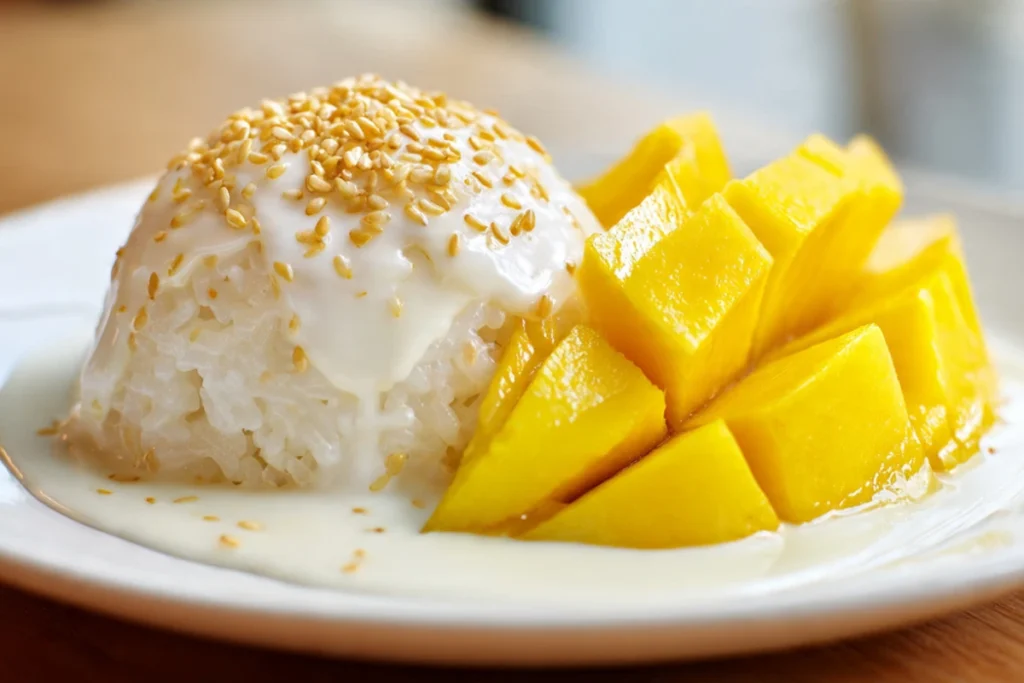
What Makes It Special
The sticky rice gets soaked in sweet coconut milk while it’s still warm, so every grain absorbs that flavor. You end up with rice that’s soft, slightly sweet, and has this subtle coconut taste that doesn’t overpower anything.
The mango needs to be really ripe. Like, almost too ripe. I learned this the hard way with underripe mangoes that were tart and firm. Completely wrong vibe. You want mangoes that smell sweet and give slightly when you press them.
This dessert shows up at every Thai restaurant for a reason. It’s refreshing, not too heavy, and hits that sweet spot between rich and light. My kids actually prefer this to ice cream most nights, which tells you something.
How to Use It
Serve it at room temperature or slightly chilled. I usually make the rice ahead and let it cool to room temp while I prep the mangoes.
It works great as a dessert after spicy Thai food because the sweetness and coolness balance everything out. But honestly, I’ve eaten this for breakfast more times than I’d like to admit. No judgment here.
You can make the rice mixture a day ahead and keep it covered in the fridge. Just bring it back to room temp before serving, or warm it slightly. Cold sticky rice gets hard and weird.
Storage Tips
Keep leftover sticky rice in an airtight container in the fridge for up to 3 days. When you reheat it, add a splash of coconut milk and warm it gently in the microwave. It won’t be quite as good as fresh, but it’s still pretty solid.
Don’t cut the mango until you’re ready to serve. Cut mango gets mushy and brown fast. Keep whole mangoes at room temp if they need to ripen, then fridge once they’re perfect.
The coconut sauce keeps well in a jar in the fridge for about a week. Reheat it gently before drizzling over the rice.
Ingredients
For the Rice:
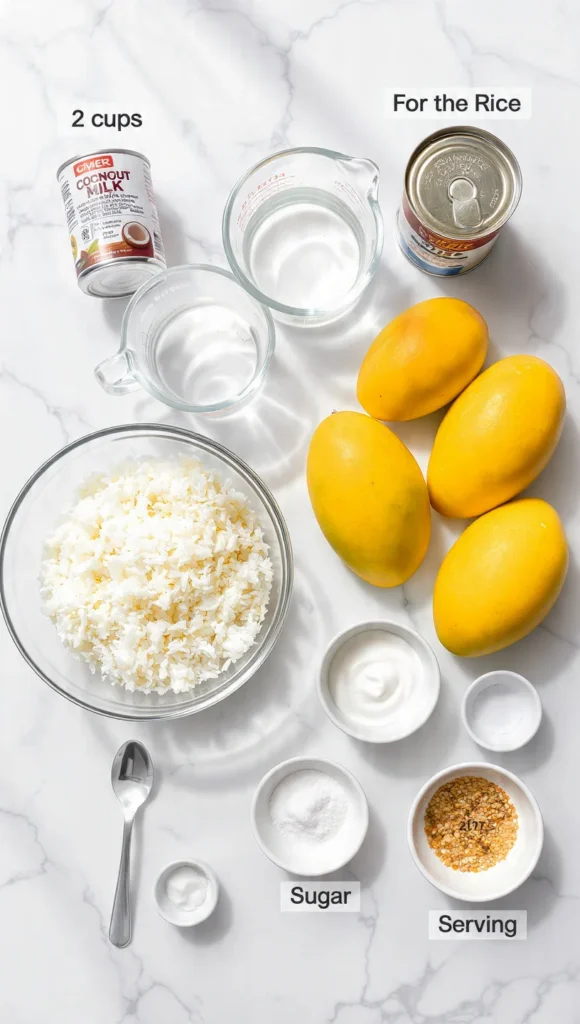
- 2 cups Thai sweet sticky rice (also called glutinous rice)
- Water for soaking
- 1 can (14 oz) coconut milk
- 1/2 cup sugar
- 1/2 teaspoon salt
For Serving:
- 2-3 ripe mangoes
- 2 tablespoons coconut cream (the thick part from the top of a coconut milk can)
- 1 tablespoon sugar
- Pinch of salt
- 2 tablespoons toasted sesame seeds (optional)
Instructions
- Soak the rice in cold water for at least 4 hours, or overnight. This step is not optional. The rice needs to absorb water before steaming or it’ll be hard and chalky.
- Drain the rice completely. Line a steamer basket with cheesecloth or a thin kitchen towel. Spread the rice in an even layer. Steam over boiling water for 25-30 minutes until the rice is soft and sticky. If you don’t have a steamer, you can use a metal colander over a pot of boiling water. Just make sure the water doesn’t touch the rice.
- While the rice steams, make the coconut sauce. Pour the coconut milk into a saucepan. Add the sugar and salt. Heat over medium, stirring until the sugar dissolves completely. Don’t let it boil. You just want it warm and combined.
- When the rice is done, transfer it to a large bowl while it’s still hot. Pour about 3/4 of the warm coconut mixture over the rice. Stir gently to coat every grain. Cover the bowl with a lid or plate and let it sit for 30 minutes. The rice will absorb the coconut milk and get softer and sweeter.
- Make the topping sauce by mixing the coconut cream with 1 tablespoon sugar and a pinch of salt. Warm it gently in a small pan until the sugar dissolves. This gets drizzled on top right before serving.
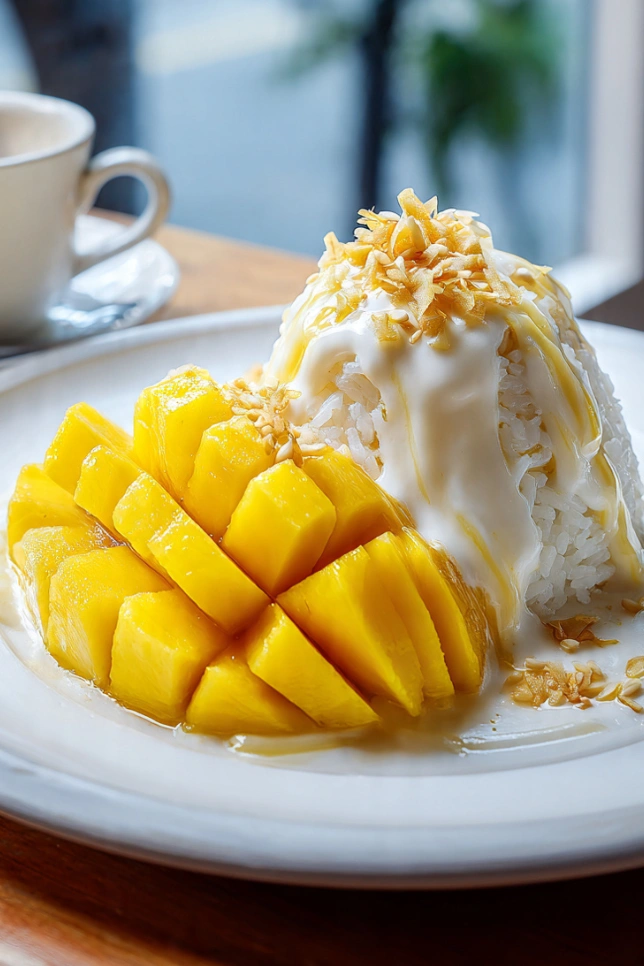
- Peel the mangoes and slice them however you like. I usually do thin strips or chunks. Arrange them next to a scoop of the sticky rice. Drizzle the coconut cream sauce over the rice. Sprinkle with sesame seeds if you want.
Notes
The sticky rice you need is different from regular jasmine rice. Look for packages labeled “sweet rice” or “glutinous rice” at Asian grocery stores. It’s usually in the rice aisle. Regular rice won’t work here.
If your coconut milk separates in the can (thick cream on top, watery liquid below), that’s normal. Just shake the can before opening, or stir it together when you pour it out.
Some people add pandan leaves to the rice while it steams for a subtle flavor. I skip this because pandan is hard to find where I live, and the dessert is still great without it.
The ratio I use is pretty sweet. If you want it less sweet, cut the sugar down to 1/3 cup instead of 1/2 cup. But taste the coconut sauce before you pour it over the rice so you can adjust.
This article is part of our comprehensive guide on Asian Cuisine: Authentic Recipes, Street Food Favorites & Traditional Dishes. For the full guide and more Asian recipes, visit the complete Asian cuisine collection.
Related Thai Recipes:
- Thai Pad Kra Pao – Fiery Thai basil stir-fry
- Thai Tom Yum Soup – Spicy and sour Thai soup
- Thai Green Curry Chicken – Fragrant coconut curry
- Vietnamese Spring Rolls – Fresh rolls with herbs and shrimp
Thai Mango Sticky Rice
Popular Thai dessert with sweet sticky rice and fresh mango
Ingredients
For the Rice:
- 2 cups Thai sweet sticky rice (also called glutinous rice)
- Water for soaking
- 1 can (14 oz) coconut milk
- 1/2 cup sugar
- 1/2 teaspoon salt
For Serving:
- 2-3 ripe mangoes
- 2 tablespoons coconut cream (thick part from top of can)
- 1 tablespoon sugar
- Pinch of salt
- 2 tablespoons toasted sesame seeds (optional)
Instructions
- Soak the rice. Soak the rice in cold water for at least 4 hours, or overnight. This step is not optional. The rice needs to absorb water before steaming or it’ll be hard and chalky.
- Steam the rice. Drain the rice completely. Line a steamer basket with cheesecloth or a thin kitchen towel. Spread the rice in an even layer. Steam over boiling water for 25-30 minutes until the rice is soft and sticky.
- Make the coconut sauce. Pour the coconut milk into a saucepan. Add the sugar and salt. Heat over medium, stirring until the sugar dissolves completely. Don’t let it boil. You just want it warm and combined.
- Combine rice and coconut. When the rice is done, transfer it to a large bowl while it’s still hot. Pour about 3/4 of the warm coconut mixture over the rice. Stir gently to coat every grain. Cover the bowl and let it sit for 30 minutes.
- Make the topping sauce. Mix the coconut cream with 1 tablespoon sugar and a pinch of salt. Warm it gently in a small pan until the sugar dissolves. This gets drizzled on top right before serving.
- Prepare and serve. Peel the mangoes and slice them however you like. Arrange them next to a scoop of the sticky rice. Drizzle the coconut cream sauce over the rice. Sprinkle with sesame seeds if you want.
Nutrition Per Serving
Kitchen Notes
Rice Type: The sticky rice you need is different from regular jasmine rice. Look for packages labeled “sweet rice” or “glutinous rice” at Asian grocery stores. Regular rice won’t work here.
Mango Selection: Use really ripe mangoes that smell sweet and give slightly when pressed. Underripe mangoes will be tart and firm, which is completely wrong for this dessert.
Coconut Milk: If your coconut milk separates in the can (thick cream on top, watery liquid below), that’s normal. Just shake the can before opening, or stir it together when you pour it out.
Storage: Keep leftover sticky rice in an airtight container in the fridge for up to 3 days. Reheat with a splash of coconut milk. Don’t cut the mango until ready to serve. The coconut sauce keeps in the fridge for about a week.