
I made my first chicken adobo after a coworker brought some to a potluck. One bite and I knew I had to learn how to make it. The vinegar tang, the deep soy flavor, those tender chunks of chicken that practically fell apart. It’s one of those dishes that looks simple but has layers of flavor you keep discovering with each bite.
Adobo is basically the national dish of the Philippines, and every Filipino family has their own version. Some make it saucy, some cook it down until it’s almost dry. Some add coconut milk, some wouldn’t dream of it. What they all have in common is that braising technique with vinegar and soy sauce that makes the chicken incredibly tender.
This is my version. Not claiming it’s the most authentic, but it’s become a weeknight staple in my house because it’s easy and the flavor payoff is huge.
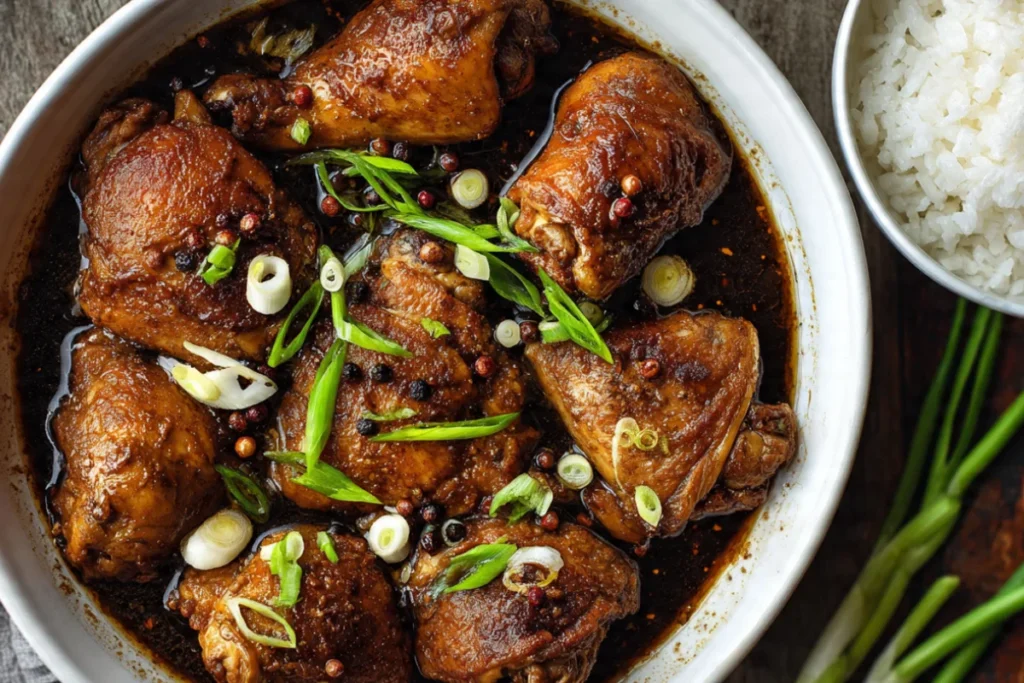
What You’re Actually Making
Chicken adobo is a braise. You’re cooking chicken in a mixture of soy sauce, vinegar, garlic, and peppercorns until it’s fall-apart tender. The vinegar does something magical here. It tenderizes the meat and gives this bright, tangy backbone that cuts through the richness of the soy sauce.
The name “adobo” comes from the Spanish word for marinade, but this dish is pure Filipino. It predates Spanish colonization. Filipinos were preserving meat in vinegar long before the Spanish arrived with their own adobo techniques.
What makes it different from other Asian braises is that vinegar-forward flavor profile. It’s not sweet like teriyaki. It’s not creamy like Indian butter chicken. It’s tangy, savory, and has this deep umami thing going on from the soy sauce and garlic.
How to Use It
Chicken adobo is comfort food. You serve it over rice, and the rice soaks up all that incredible sauce. That’s non-negotiable. The sauce is half the point.
I’ve served this at dinner parties, and people always go back for seconds. It’s also great for meal prep. The flavor actually gets better after a day in the fridge. I’ll make a big batch on Sunday and eat it all week.
Some people like to reduce the sauce down until it’s thick and almost sticky. Others keep it brothier. I fall somewhere in the middle. Enough sauce to coat the rice, but not so much that it’s swimming.
Storing Leftovers
Keep it in an airtight container in the fridge for up to 5 days. The chicken stays tender, and like I said, the flavor deepens over time.
You can freeze it too. Put it in freezer-safe containers and it’ll keep for about 3 months. Thaw in the fridge overnight and reheat gently on the stove. Add a splash of water if the sauce has thickened too much.
When reheating, do it on low heat. High heat can make the chicken tough, and you’ve worked too hard to get it tender to mess it up now.
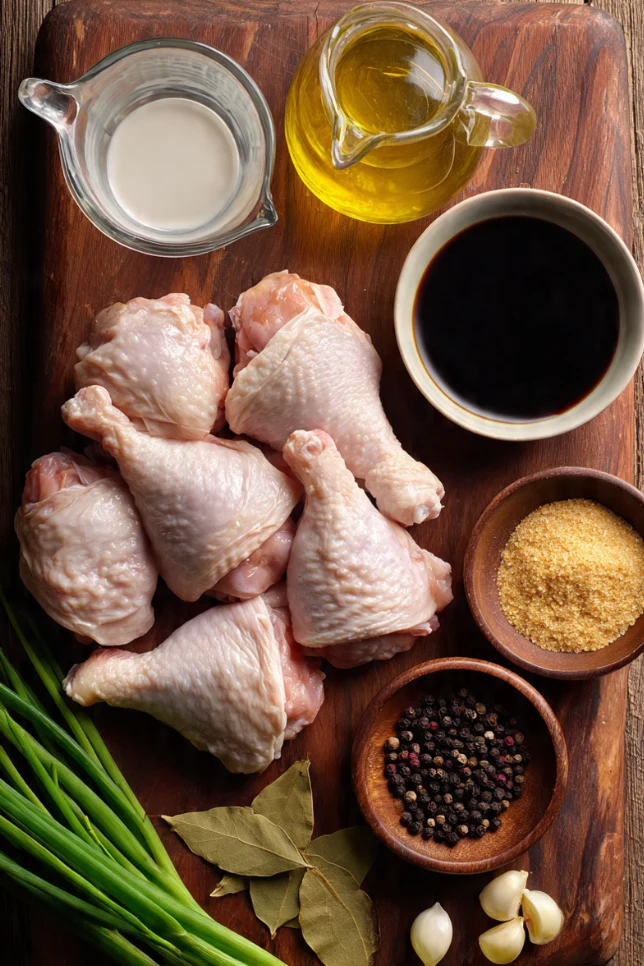
Ingredients
For the Adobo:
- 2.5 lbs chicken thighs and drumsticks (bone-in, skin-on)
- 1/2 cup soy sauce (I use low-sodium)
- 1/2 cup white vinegar (cane vinegar if you can find it)
- 1 cup water
- 8-10 garlic cloves, smashed
- 2 bay leaves
- 1 tablespoon whole black peppercorns
- 2 tablespoons vegetable oil
- Optional: 1 tablespoon brown sugar
For Serving:
- Steamed white rice
- Sliced green onions
Instructions
1. Marinate the chicken (optional but recommended). Put the chicken in a large bowl. Add the soy sauce, vinegar, smashed garlic, bay leaves, and peppercorns. Mix it around so everything’s coated. Cover and refrigerate for at least 30 minutes, up to overnight. This step isn’t required, but it gives you deeper flavor.
2. Sear the chicken. Heat the oil in a large pot or Dutch oven over medium-high heat. Pull the chicken out of the marinade (save the marinade) and pat it dry with paper towels. Sear the chicken pieces skin-side down until golden brown, about 4-5 minutes per side. You’re not cooking it through, just getting color on it. Remove and set aside.
3. Build the braising liquid. Pour the marinade into the pot. Add the cup of water. If you didn’t marinate the chicken, just add all the soy sauce, vinegar, garlic, bay leaves, peppercorns, and water now. Scrape up any browned bits from the bottom of the pot.
4. Braise the chicken. Put the chicken back in the pot. The liquid should come about halfway up the chicken. Bring to a boil, then reduce to a low simmer. Cover and cook for 30-35 minutes, turning the chicken once halfway through.
5. Reduce the sauce. After 35 minutes, the chicken should be tender. Remove the lid and increase the heat to medium. Let the sauce reduce for about 10-15 minutes until it’s thickened slightly and coats the back of a spoon. If you want it sweeter, stir in the brown sugar during this step.
6. Check for seasoning. Taste the sauce. It should be tangy and savory with a good balance. If it’s too sharp, add a bit more sugar. Too salty, add a splash of water.
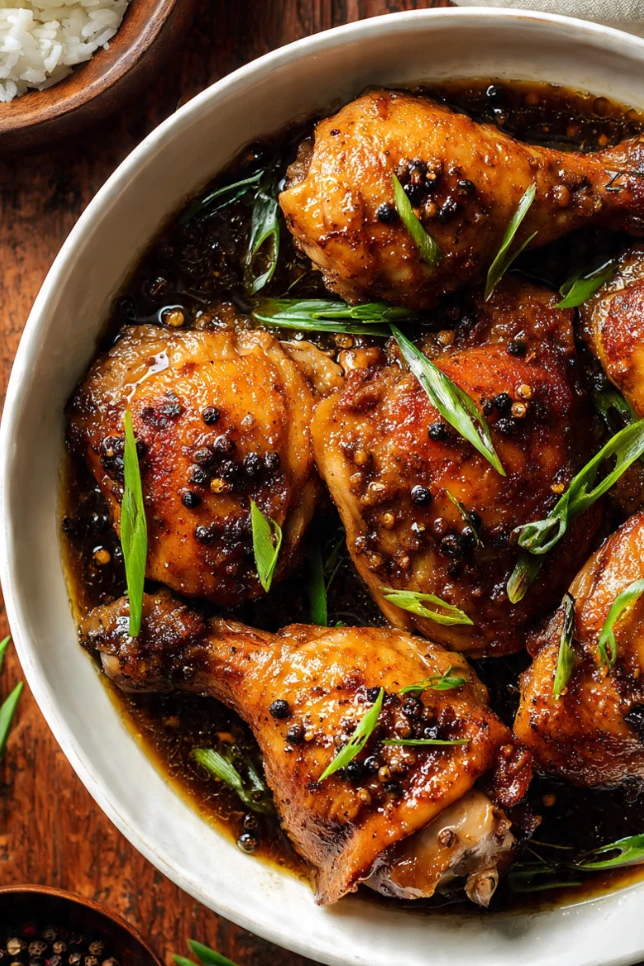
7. Serve. Put the chicken on plates over steamed rice. Spoon that sauce generously over everything. Sprinkle with sliced green onions if you want.
Kitchen Notes
The vinegar smell when you first start cooking this is strong. Don’t worry. It mellows out as it cooks and turns into this incredible tangy-savory sauce. The first time I made it, my husband walked in and said “what is that smell?” By the time it was done, he was hovering over the pot asking when dinner would be ready.
You can use chicken breasts if you prefer white meat, but thighs and drumsticks stay way more tender during the long braise. Dark meat handles the cooking time better.
Some versions add hard-boiled eggs in the last 10 minutes of cooking. They soak up the sauce and it’s pretty amazing. I don’t do it every time, but when I remember, it’s a nice touch.
This dish is part of our comprehensive guide on Asian Cuisine, where you’ll find everything from Thai curries to Japanese comfort food. If you’re into bold, tangy flavors like this, you might also like Korean Kimchi Fried Rice or the aromatic Vietnamese Pho Ga. For something with a similar braising technique but different flavor profile, try Malaysian Beef Rendang.
The beauty of adobo is that it’s forgiving. The ratios don’t have to be perfect. The cooking time can vary. It’s one of those dishes where you develop a feel for it after making it a few times, and then it becomes second nature.
Filipino Chicken Adobo
Tender chicken braised in soy sauce, vinegar, garlic, and peppercorns
Ingredients
For the Adobo:
- 2.5 lbs chicken thighs and drumsticks (bone-in, skin-on)
- 1/2 cup soy sauce (low-sodium preferred)
- 1/2 cup white vinegar (cane vinegar if available)
- 1 cup water
- 8-10 garlic cloves, smashed
- 2 bay leaves
- 1 tablespoon whole black peppercorns
- 2 tablespoons vegetable oil
- 1 tablespoon brown sugar (optional)
For Serving:
- Steamed white rice
- Sliced green onions
Instructions
- Marinate the chicken. Put the chicken in a large bowl. Add the soy sauce, vinegar, smashed garlic, bay leaves, and peppercorns. Mix it around so everything’s coated. Cover and refrigerate for at least 30 minutes, up to overnight. This step is optional but recommended for deeper flavor.
- Sear the chicken. Heat the oil in a large pot or Dutch oven over medium-high heat. Pull the chicken out of the marinade (save the marinade) and pat it dry with paper towels. Sear the chicken pieces skin-side down until golden brown, about 4-5 minutes per side. You’re not cooking it through, just getting color on it. Remove and set aside.
- Build the braising liquid. Pour the marinade into the pot. Add the cup of water. If you didn’t marinate the chicken, just add all the soy sauce, vinegar, garlic, bay leaves, peppercorns, and water now. Scrape up any browned bits from the bottom of the pot.
- Braise the chicken. Put the chicken back in the pot. The liquid should come about halfway up the chicken. Bring to a boil, then reduce to a low simmer. Cover and cook for 30-35 minutes, turning the chicken once halfway through.
- Reduce the sauce. After 35 minutes, the chicken should be tender. Remove the lid and increase the heat to medium. Let the sauce reduce for about 10-15 minutes until it’s thickened slightly and has a nice gloss to it. If you want it sweeter, stir in the brown sugar during this step.
- Check for seasoning. Taste the sauce. It should be tangy and savory with a good balance. If it’s too sharp, add a bit more sugar. Too salty, add a splash of water.
- Serve. Put the chicken on plates over steamed rice. Spoon that sauce generously over everything. Sprinkle with sliced green onions.
Nutrition Per Serving
Kitchen Notes
Vinegar choice: White vinegar works great, but if you can find Filipino cane vinegar (sukang maasim), use that. It’s a bit mellower and more traditional. Apple cider vinegar works in a pinch too.
Dark meat vs. white meat: Chicken thighs and drumsticks are traditional and stay tender during the long braise. You can use breasts, but watch them closely so they don’t dry out.
The strong smell: When you first add the vinegar, the smell is intense. Don’t worry. As it cooks, it mellows into something incredible. My husband used to run out of the kitchen when I started making this. Now he knows it means dinner’s going to be good.
Storage: Keep leftovers in an airtight container in the fridge for up to 5 days. The flavor gets even better. Can freeze for up to 3 months. Thaw in the fridge overnight and reheat gently on the stove with a splash of water if needed.
Variations: Some families add hard-boiled eggs in the last 10 minutes. They soak up the sauce beautifully. Others add coconut milk for a richer, less tangy version. Both are delicious.