
I made kimchi fried rice for the first time on a Tuesday night when my fridge was basically empty. Just some leftover rice, half a jar of kimchi my neighbor gave me, and eggs. Thirty minutes later, my husband asked if we could add it to the regular rotation.
This dish is what Koreans call “bokkeumbap,” and it’s the kind of recipe that makes you look like you know what you’re doing in the kitchen when really, you’re just working with what you’ve got. The kimchi does most of the heavy lifting flavor-wise.
This article is part of our comprehensive guide on Asian Cuisine. For more authentic Asian recipes and cooking tips, visit the full guide.
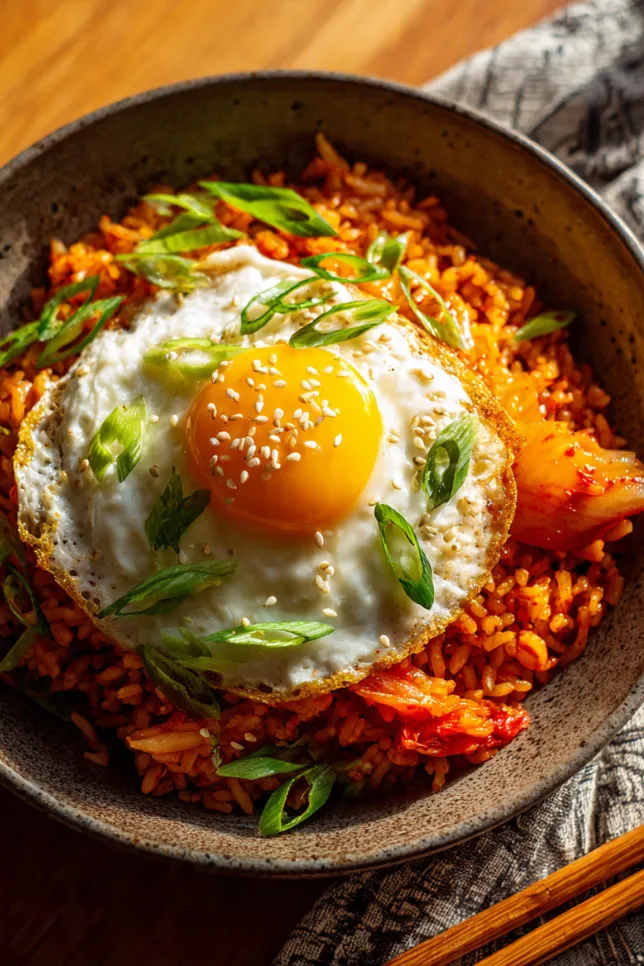
What It’s Actually For
Kimchi fried rice is Korea’s answer to “what do I make with this leftover rice and aging kimchi?” It’s better with older, more fermented kimchi because the tanginess is more pronounced. Fresh kimchi is fine, but it won’t have that deep, funky flavor that makes this dish special.
I make this when I need something fast and satisfying. It takes less time than ordering takeout and uses ingredients I usually have around. The kids eat it (though I go lighter on the gochujang for them), and it reheats well for lunch the next day.
It’s also the dish I recommend when people tell me they want to try Korean food but feel intimidated by Korean Bibimbap Bowl or other recipes with longer ingredient lists. This one keeps it simple.
How to Store Kimchi (And Why It Matters)
Keep your kimchi in the fridge in an airtight container. It’ll keep fermenting slowly, which is actually what you want for this recipe. I’ve used kimchi that’s been sitting in my fridge for two months, and honestly, it made better fried rice than the fresh stuff.
The rice needs to be cold. Day-old rice from the fridge works perfectly because the grains are drier and separate easily. Fresh hot rice turns mushy when you stir-fry it. I learned this the hard way after ruining a batch with warm rice that clumped together.
Store leftovers in the fridge for up to 3 days. The fried egg doesn’t reheat great, so I usually fry a fresh one when I’m eating leftovers.
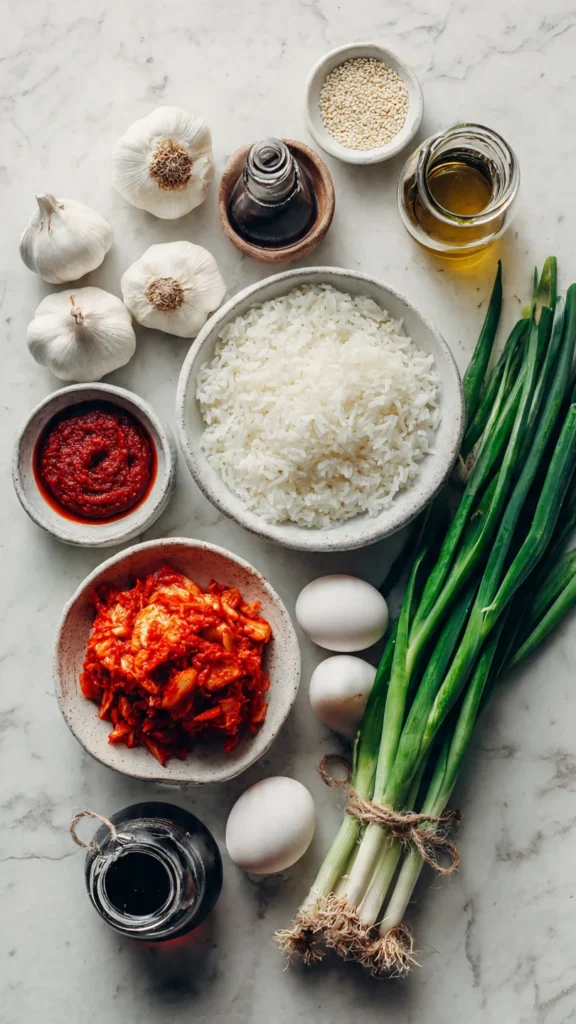
Ingredients
For the Rice:
- 3 cups cold cooked rice (preferably day-old)
- 1 cup kimchi, chopped (plus 2 tablespoons kimchi juice)
- 2 tablespoons gochujang (Korean red pepper paste)
- 1 tablespoon soy sauce
- 1 tablespoon sesame oil
- 2 tablespoons vegetable oil
- 3 cloves garlic, minced
- 3-4 scallions, sliced (white and green parts separated)
For Serving:
- 4 eggs (one per serving)
- Sesame seeds
- Extra sliced scallions
- Seaweed strips (optional)
Instructions
- Get your kimchi ready. Chop it into small pieces, about half-inch chunks. Save a couple tablespoons of the juice from the jar. That liquid is packed with flavor.
- Make the sauce. Mix the gochujang, soy sauce, sesame oil, and kimchi juice in a small bowl. This is your flavor base. Taste it. If it’s too spicy, add a bit more sesame oil or soy sauce.
- Heat your pan. Use a large skillet or wok over medium-high heat. Add the vegetable oil and let it get hot. You want to hear a sizzle when the ingredients hit the pan.
- Start with aromatics. Toss in the garlic and white parts of the scallions. Stir for about 30 seconds until fragrant. Don’t let the garlic burn.
- Add the kimchi. Throw in your chopped kimchi and stir-fry for 2-3 minutes. You want it to soften slightly and release its flavor into the oil.
- Break up the rice. Add your cold rice to the pan. Break up any clumps with your spatula. This takes a minute or two. Cold rice resists at first, but keep working it.
- Mix in the sauce. Pour your gochujang mixture over the rice. Stir everything together until the rice is evenly coated and turns a nice reddish color. Keep stirring for about 3-4 minutes. You want the rice to get slightly crispy on the edges.
- Finish with scallions. Toss in the green parts of the scallions. Stir for another 30 seconds, then turn off the heat.
- Fry the eggs. In a separate pan, fry your eggs. I like them with runny yolks because breaking the yolk into the rice adds richness. But cook them however you like.
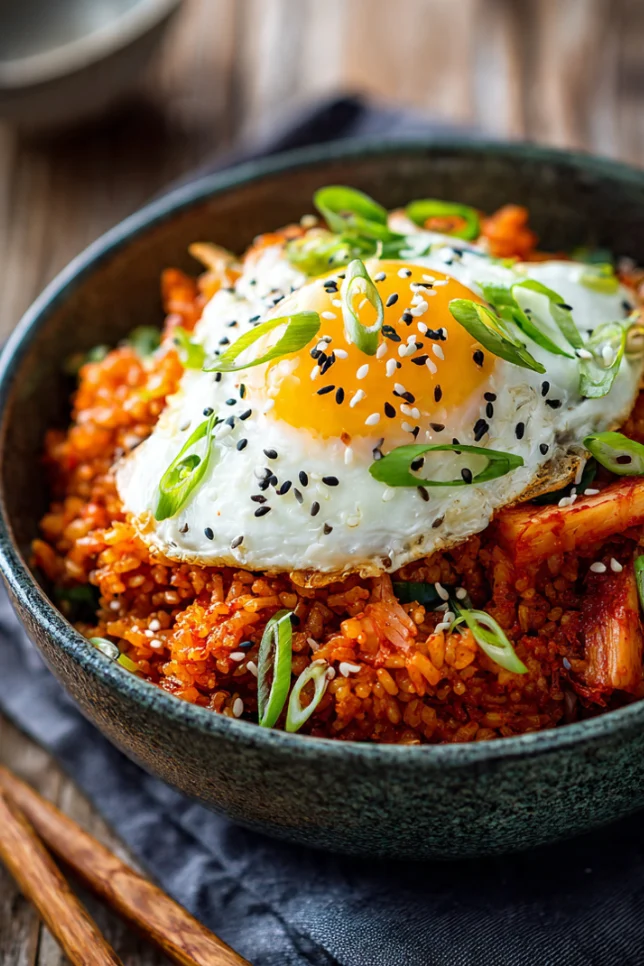
- Plate it. Divide the rice among bowls. Top each with a fried egg, sesame seeds, and extra scallions. If you have seaweed strips, crumble some on top.
A Few Things I’ve Learned
The type of kimchi matters. I usually use napa cabbage kimchi, the most common kind. Radish kimchi (kkakdugi) works too and adds a nice crunch. Just avoid the really watery varieties.
Gochujang spice levels vary by brand. Start with less if you’re not sure. You can always add more at the table, but you can’t take it out. I keep both mild and spicy versions in my fridge for this exact reason.
The key to good fried rice is high heat and constant movement. Don’t just dump everything in and walk away. Keep stirring. That’s how you get those slightly crispy, caramelized bits that make fried rice actually good instead of just okay.
If you’re making this for meal prep, stop before frying the eggs. The rice reheats fine, but fry a fresh egg when you’re ready to eat. Trust me on this.
Want more Korean comfort food? Try Korean Japchae Noodles for another weeknight-friendly dish, or level up to Korean Bulgogi Beef when you have a bit more time.
The beauty of this dish is its flexibility. Out of scallions? Use regular onions. No sesame seeds? Skip them. The kimchi and gochujang are doing the real work here. Everything else is just supporting cast.
I’ve made this probably fifty times now, and it never gets old. Sometimes I throw in leftover chicken or pork. Sometimes I add frozen peas for my kids. Sometimes I just keep it simple with exactly what’s written here. All versions work.
The first time you make it, stick to the recipe. After that, you’ll figure out your own version. That’s how all the best home cooking happens.
Korean Kimchi Fried Rice
Spicy fried rice made with tangy kimchi and gochujang
Ingredients
For the Rice:
- 3 cups cold cooked rice (preferably day-old)
- 1 cup kimchi, chopped (plus 2 tablespoons kimchi juice)
- 2 tablespoons gochujang (Korean red pepper paste)
- 1 tablespoon soy sauce
- 1 tablespoon sesame oil
- 2 tablespoons vegetable oil
- 3 cloves garlic, minced
- 3-4 scallions, sliced (white and green parts separated)
For Serving:
- 4 eggs (one per serving)
- Sesame seeds
- Extra sliced scallions
- Seaweed strips (optional)
Instructions
- Get your kimchi ready. Chop it into small pieces, about half-inch chunks. Save a couple tablespoons of the juice from the jar. That liquid is packed with flavor.
- Make the sauce. Mix the gochujang, soy sauce, sesame oil, and kimchi juice in a small bowl. This is your flavor base. Taste it. If it’s too spicy, add a bit more sesame oil or soy sauce.
- Heat your pan. Use a large skillet or wok over medium-high heat. Add the vegetable oil and let it get hot. You want to hear a sizzle when the ingredients hit the pan.
- Start with aromatics. Toss in the garlic and white parts of the scallions. Stir for about 30 seconds until fragrant. Don’t let the garlic burn.
- Add the kimchi. Throw in your chopped kimchi and stir-fry for 2-3 minutes. You want it to soften slightly and release its flavor into the oil.
- Break up the rice. Add your cold rice to the pan. Break up any clumps with your spatula. This takes a minute or two. Cold rice resists at first, but keep working it.
- Mix in the sauce. Pour your gochujang mixture over the rice. Stir everything together until the rice is evenly coated and turns a nice reddish color. Keep stirring for about 3-4 minutes. You want the rice to get slightly crispy on the edges.
- Finish with scallions. Toss in the green parts of the scallions. Stir for another 30 seconds, then turn off the heat.
- Fry the eggs. In a separate pan, fry your eggs. I like them with runny yolks because breaking the yolk into the rice adds richness. But cook them however you like.
- Plate it. Divide the rice among bowls. Top each with a fried egg, sesame seeds, and extra scallions. If you have seaweed strips, crumble some on top.
Nutrition Per Serving
Kitchen Notes
Kimchi Choice: Napa cabbage kimchi works best. The more fermented and tangy, the better the flavor. Fresh kimchi is fine but won’t have the same depth. Radish kimchi (kkakdugi) also works and adds nice crunch.
Rice is Key: Day-old refrigerated rice is essential. Fresh warm rice turns mushy and clumpy when stir-fried. If you only have fresh rice, spread it on a baking sheet and refrigerate for 30 minutes before using.
Gochujang Heat: Brands vary in spice level. Start with 1 tablespoon if sensitive to heat, taste the sauce, then add more. You can always adjust at the table with extra gochujang on the side.
Storage: Refrigerate leftovers in an airtight container for up to 3 days. Reheat in a skillet over medium heat with a splash of water. Fry a fresh egg when serving rather than storing fried eggs with the rice.