
The first time I had real ramen in Japan, I sat at a tiny counter in Fukuoka with about eight seats and a kitchen the size of a closet. The bowl they put in front of me looked almost too full to eat. Rich, creamy tonkotsu broth, pork belly so tender it fell apart with chopsticks, a soft-boiled egg cut in half, and a handful of scallions on top.
I finished every single drop. That was three years ago and I’ve been chasing that bowl ever since.
Making a proper tonkotsu broth from scratch takes 12 hours of simmering pork bones. I’m not going to pretend that’s a weeknight thing. But here’s what I’ve figured out over a lot of trial and error: you can build a broth that’s genuinely rich and satisfying in about an hour and a half, using a combination of pork bones and a few smart shortcuts. It won’t be the exact same thing as Fukuoka, but it’ll be close enough that your whole house smells incredible.
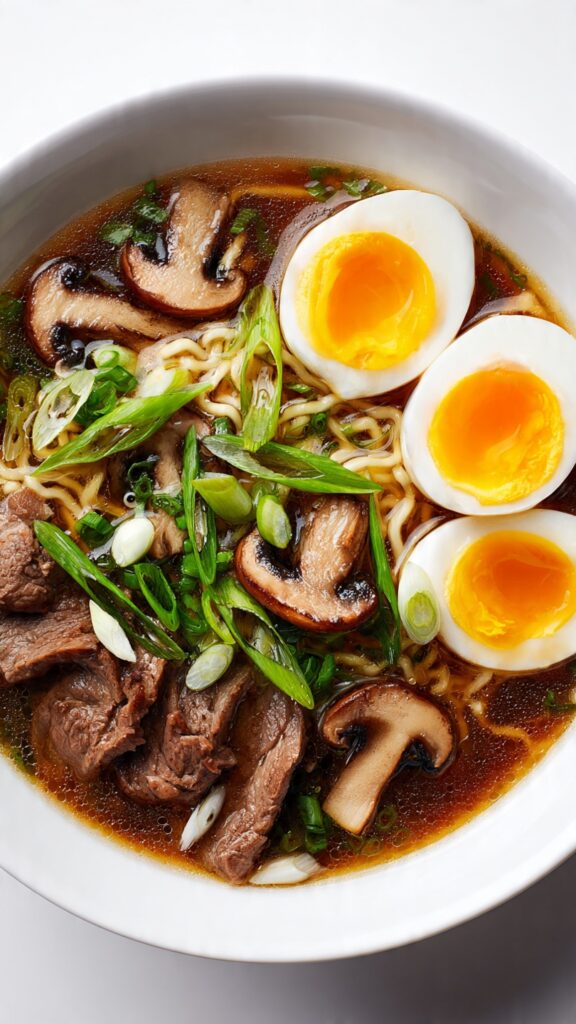
Why Ramen Is Worth Making at Home
Store-bought ramen noodles with the seasoning packet is one thing. Homemade ramen is something else entirely. The broth is where everything lives in this dish. A good broth carries the whole bowl.
The toppings matter too, but they’re mostly about texture and contrast. The pork belly adds richness. The egg adds creaminess. The scallions and nori cut through all of that heaviness. Every element has a job.
If you enjoy building layered, comforting bowls like this, you might also like our Korean Bibimbap Bowl, which does something similar with rice instead of noodles.
The Broth: Where to Focus Your Energy
This is the part that takes the most time, but it’s also the part that makes or breaks the dish. Here’s my approach.
I start with pork bones, ideally neck bones or trotters if you can find them. Roasting them first adds a deeper flavor than just dumping them in raw. Once they’re roasted, I simmer them low and slow with aromatics. Ginger, garlic, onion, and a splash of soy sauce.
The broth should turn cloudy and slightly milky as it cooks. That’s the collagen breaking down from the bones. If it stays clear, you need more time or more bones.
Taste as you go. Season with salt and a little white pepper at the end. Some people add a spoonful of miso paste for extra depth. That’s a solid move if your broth tastes a little flat.
How to Store It
Ramen broth freezes beautifully. Pour it into containers or ice cube trays and freeze for up to 3 months. Thaw overnight in the fridge or reheat directly on the stovetop.
The pork belly and soft-boiled eggs should be stored separately in the fridge. They’ll keep for about 3 to 4 days. Don’t cook the noodles ahead of time. They get mushy fast. Cook them right before serving.
Ingredients
For the Broth:
- 2 lbs pork neck bones or trotters
- 1 tablespoon vegetable oil
- 1 large onion, halved
- 6 cloves garlic, smashed
- 2-inch piece fresh ginger, sliced
- 8 cups water
- 2 tablespoons soy sauce
- 1 teaspoon white pepper
- Salt to taste
For the Pork Belly:
- 1 lb pork belly, skin on
- 2 tablespoons soy sauce
- 1 tablespoon mirin
- 1 tablespoon sake or dry white wine
- 2 cloves garlic, minced
- 1 teaspoon sugar
For the Soft-Boiled Eggs:
- 4 large eggs
- 2 tablespoons soy sauce
- 1 tablespoon mirin
- 1/2 cup water
For Serving:
- 4 portions fresh ramen noodles
- 4 sheets nori (seaweed)
- 4 scallions, thinly sliced
- 1 teaspoon sesame seeds
- Chili oil (optional)
- Butter (optional, a small pat stirred in at the end)
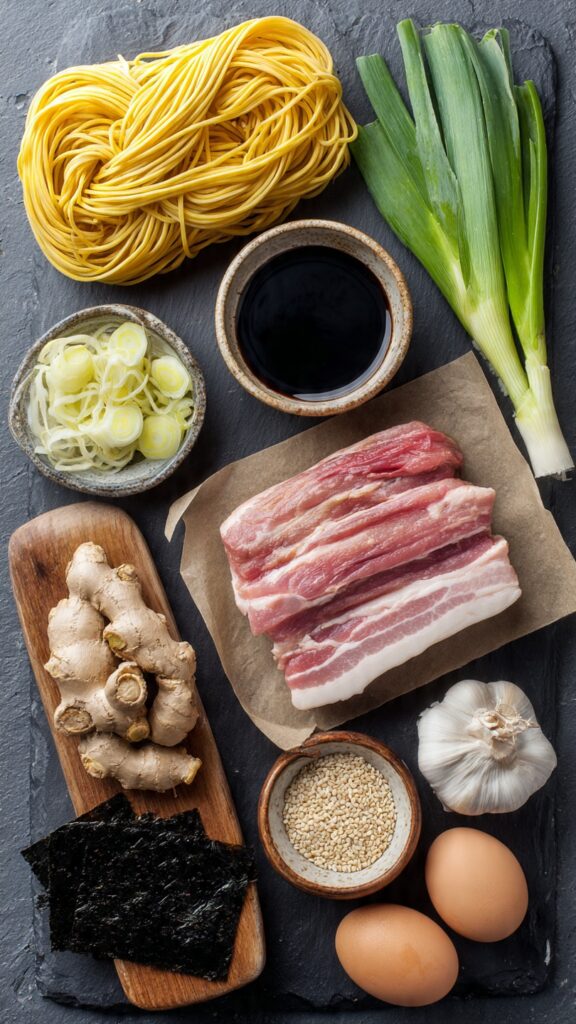
Instructions
- Preheat your oven to 425°F. Spread the pork bones on a baking sheet and roast for about 25 minutes until they’re browned and a little caramelized. This step adds serious flavor. Don’t skip it.
- While the bones roast, sear the onion halves and garlic in a large pot with oil over medium-high heat until they’re golden on the cut side. About 3 minutes.
- Add the roasted bones to the pot. Pour in the water. Bring it to a boil, then immediately drop it to a low simmer. Skim off any foam that rises to the top in the first few minutes.
- Add the ginger, soy sauce, and white pepper. Let it simmer uncovered for about 1 hour to 1.5 hours. The broth should turn cloudy and start to feel slightly thick when you dip a spoon in it. Taste and add salt as needed.
- While the broth simmers, make the pork belly. Score the skin side with a sharp knife in a crosshatch pattern. Mix the soy sauce, mirin, sake, garlic, and sugar together. Rub it all over the pork belly and let it sit for at least 20 minutes.
- Sear the pork belly skin-side down in a hot pan for about 4 minutes until the skin is crispy and golden. Flip it and cook another 3 minutes on the other side. Let it rest before slicing. You want about half-inch thick slices.
- For the eggs, bring a small pot of water to a rolling boil. Gently lower in the eggs and cook for exactly 6 minutes and 30 seconds for a jammy, slightly runny yolk. Transfer them to an ice bath immediately. Peel them once they’re cool.
- Make the egg marinade by combining soy sauce, mirin, and water in a small bowl. Place the peeled eggs in the marinade and let them soak for at least 30 minutes. Overnight in the fridge is even better. They’ll turn a beautiful amber color.
- Cook your ramen noodles right before you serve. Follow the package directions. Fresh noodles usually need about 2 to 3 minutes in boiling water. Drain them well.
- Strain the broth through a fine mesh sieve into bowls. Add a pat of butter if you’re using it and stir until melted. Arrange the noodles in each bowl, then add 2 to 3 slices of pork belly, a halved marinated egg, a sheet of nori, and a pile of scallions. Finish with sesame seeds and chili oil if you like.
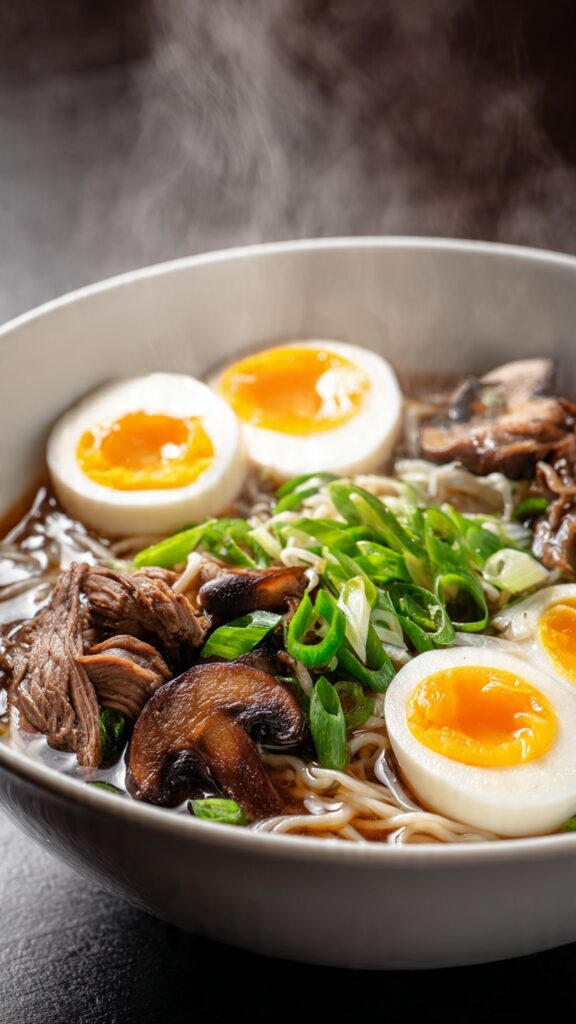
A Few Things I’ve Learned
The butter trick is borrowed from French cooking but works incredibly well here. A small pat stirred into the hot broth right before serving adds a glossy richness that makes the whole bowl feel more restaurant-quality. It’s not traditional, but it works.
If you want to go deeper into Japanese comfort food at home, our Japanese Katsu Curry is another dish that punches way above its weight for how simple it is. And if you’re planning a full Japanese spread, our Japanese Onigiri makes a great side or appetizer to round things out. For something lighter to start the meal, check out our Japanese Tempura Platter as a crispy contrast before the richness of the ramen hits.
Related Articles
Want to explore more of what Asian cooking has to offer? Head back to our main Asian Cuisine guide where all the recipes are connected and you can find something for any craving.
This article is part of our comprehensive guide on Asian Cuisine: Authentic Recipes, Street Food Favorites & Traditional Dishes. For the full guide, visit the main page.
Japanese Ramen Bowl
Rich tonkotsu broth with pork belly, jammy marinated egg, and fresh scallions
Ingredients
For the Broth:
- 2 lbs pork neck bones or trotters
- 1 tablespoon vegetable oil
- 1 large onion, halved
- 6 cloves garlic, smashed
- 2-inch piece fresh ginger, sliced
- 8 cups water
- 2 tablespoons soy sauce
- 1 teaspoon white pepper
- Salt to taste
For the Pork Belly:
- 1 lb pork belly, skin on
- 2 tablespoons soy sauce
- 1 tablespoon mirin
- 1 tablespoon sake or dry white wine
- 2 cloves garlic, minced
- 1 teaspoon sugar
For the Marinated Eggs:
- 4 large eggs
- 2 tablespoons soy sauce
- 1 tablespoon mirin
- 1/2 cup water
For Serving:
- 4 portions fresh ramen noodles
- 4 sheets nori (seaweed)
- 4 scallions, thinly sliced
- 1 teaspoon sesame seeds
- Chili oil (optional)
- Butter (optional, a small pat per bowl)
Instructions
- Roast the pork bones. Preheat your oven to 425°F. Spread the pork bones on a baking sheet and roast for about 25 minutes until they’re browned and a little caramelized. This step adds serious flavor. Don’t skip it.
- Sear the aromatics. While the bones roast, sear the onion halves and garlic in a large pot with oil over medium-high heat until they’re golden on the cut side. About 3 minutes.
- Simmer the broth. Add the roasted bones to the pot. Pour in the water. Bring it to a boil, then immediately drop it to a low simmer. Skim off any foam that rises in the first few minutes. Add ginger, soy sauce, and white pepper. Simmer uncovered for 1 to 1.5 hours until the broth turns cloudy and feels slightly thick. Season with salt.
- Prep the pork belly. Score the skin side with a sharp knife in a crosshatch pattern. Mix together soy sauce, mirin, sake, garlic, and sugar. Rub it all over the pork belly and let it sit for at least 20 minutes.
- Sear the pork belly. Sear it skin-side down in a hot pan for about 4 minutes until the skin is crispy and golden. Flip and cook another 3 minutes. Let it rest before slicing into half-inch thick pieces.
- Make the marinated eggs. Bring a small pot of water to a rolling boil. Gently lower in the eggs and cook for exactly 6 minutes and 30 seconds. Transfer to an ice bath immediately. Peel once cool. Combine soy sauce, mirin, and water for the marinade. Soak the eggs for at least 30 minutes. Overnight in the fridge is even better.
- Cook noodles and assemble. Cook fresh ramen noodles right before serving, about 2 to 3 minutes. Drain well. Strain the broth into bowls. Stir in a pat of butter if using. Arrange noodles, pork belly, a halved marinated egg, nori, scallions, sesame seeds, and chili oil in each bowl.
Nutrition Per Serving
Kitchen Notes
The Broth: A true tonkotsu broth simmers for 12+ hours, but this method gets you a genuinely rich result in about 90 minutes. If you have more time, keep simmering. The longer it goes, the creamier it gets. Add more water if it reduces too much.
The Butter Trick: Stirring a small pat of butter into the hot broth right before serving adds a glossy richness. It’s not traditional, but it makes a noticeable difference. Totally optional.
The Eggs: Marinating overnight gives the deepest color and flavor. But even 30 minutes works in a pinch. The timing on the boil is everything. 6 minutes 30 seconds gives you that perfect jammy center.
Noodles: Fresh ramen noodles from an Asian grocery store are worth the extra trip. If you can only find dried, cook them according to the package but rinse under cold water after draining to stop the cooking and remove starch.
Storage: The broth freezes well for up to 3 months. Store pork belly and eggs separately in the fridge for up to 3 to 4 days. Always cook noodles fresh right before serving.