
This article is part of our comprehensive guide on Asian Cuisine. For the full guide exploring Thai curries, Japanese comfort dishes, and more Asian favorites, visit our main Asian cuisine page.
I first tried Kung Pao Chicken at a hole-in-the-wall Sichuan place in San Francisco, and it completely changed what I thought this dish should taste like. None of that gloopy brown sauce you get at most takeout places. This was all about balance: spicy, tangy, slightly sweet, with those crunchy peanuts in every bite.
The real deal Kung Pao is a stir-fry. Quick cooking over high heat. The chicken stays tender, the peppers keep their crunch, and everything gets coated in this glossy, intensely flavored sauce. The key ingredient? Sichuan peppercorns. They give you that signature numbing, tingly sensation that makes your lips feel electric.
Most people skip the peppercorns because they’re harder to find, but honestly, they’re what separates good Kung Pao from great Kung Pao. You can order them online if your grocery store doesn’t carry them. Trust me, it’s worth it.
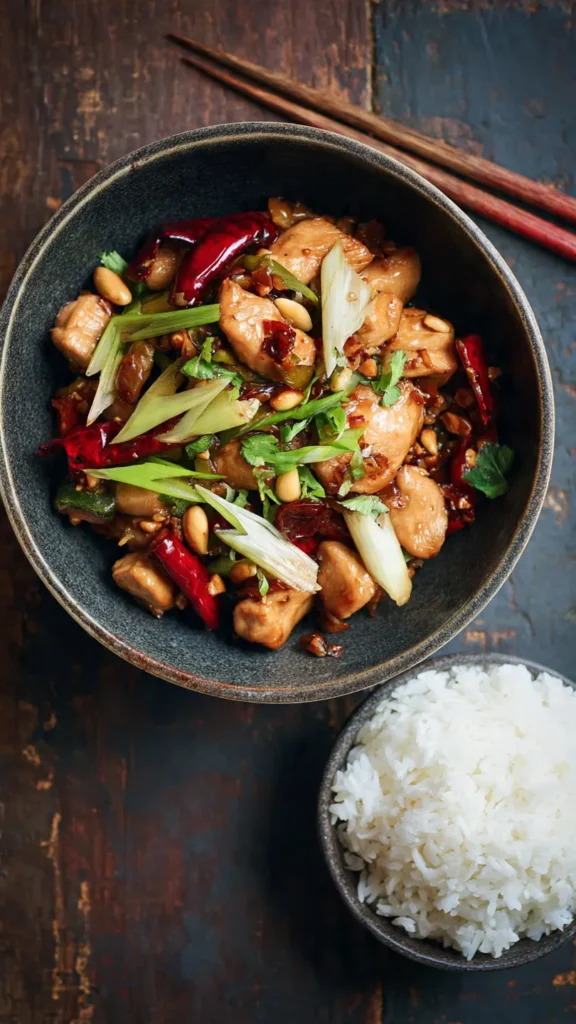
What Makes Kung Pao Chicken Special
Kung Pao belongs to Sichuan cuisine, which is known for bold, spicy flavors. The dish was supposedly named after a Qing Dynasty official, Ding Baozhen, whose title was Kung Pao (Palace Guardian). The story goes that he loved this particular preparation so much, it took on his name.
What I love about Kung Pao is how it hits every taste sensation at once. The dried chilies bring heat. The vinegar adds tang. A touch of sugar balances everything out. And those Sichuan peppercorns? They create this numbing sensation called “ma la” that’s different from regular spicy heat.
The peanuts aren’t just thrown in at the end. They’re part of the texture contrast. You’ve got tender chicken, crisp vegetables, and those crunchy nuts all working together.
Best Uses for Kung Pao Chicken
This is weeknight dinner material. Start to finish, you’re looking at 30 minutes max. Serve it over steamed white rice or fried rice, and you’ve got a complete meal.
I make this when I’m craving takeout but don’t want to spend the money or deal with the wait. It’s also great for meal prep. The flavors actually get better after a day in the fridge, which is unusual for stir-fries.
If you’re having people over and want to do a Chinese feast, Kung Pao pairs really well with Chinese Beef and Broccoli, Chinese Mapo Tofu, or some steamed dumplings. The heat level makes it a good contrast to milder dishes.
It’s also one of those recipes where you can adjust the spice easily. More dried chilies, more heat. Fewer chilies, more approachable for kids. My son won’t touch the spicy version, so I sometimes make a half batch with no chilies and another with all the heat.
How to Store Kung Pao Chicken
Leftovers keep well in an airtight container in the fridge for 3 to 4 days. The peanuts lose some of their crunch after the first day, which is why I sometimes store them separately and toss them in when I reheat.
To reheat, use a skillet or wok over medium-high heat with a splash of water or chicken broth. Microwaving works in a pinch, but the texture won’t be quite as good. You want to bring back that slight char and caramelization.
I don’t recommend freezing this one. The vegetables get mushy, and the sauce separates when you thaw it. If you’re planning to freeze something, go with something like Indian Butter Chicken instead. That actually freezes beautifully.
Ingredients
For the Chicken:
- 1.5 lbs boneless, skinless chicken thighs, cut into bite-sized pieces
- 2 tablespoons soy sauce
- 1 tablespoon Shaoxing wine (or dry sherry)
- 1 tablespoon cornstarch
For the Sauce:
- 3 tablespoons soy sauce
- 2 tablespoons Chinese black vinegar (or rice vinegar)
- 1 tablespoon hoisin sauce
- 1 tablespoon sugar
- 1 teaspoon cornstarch
- 2 tablespoons water
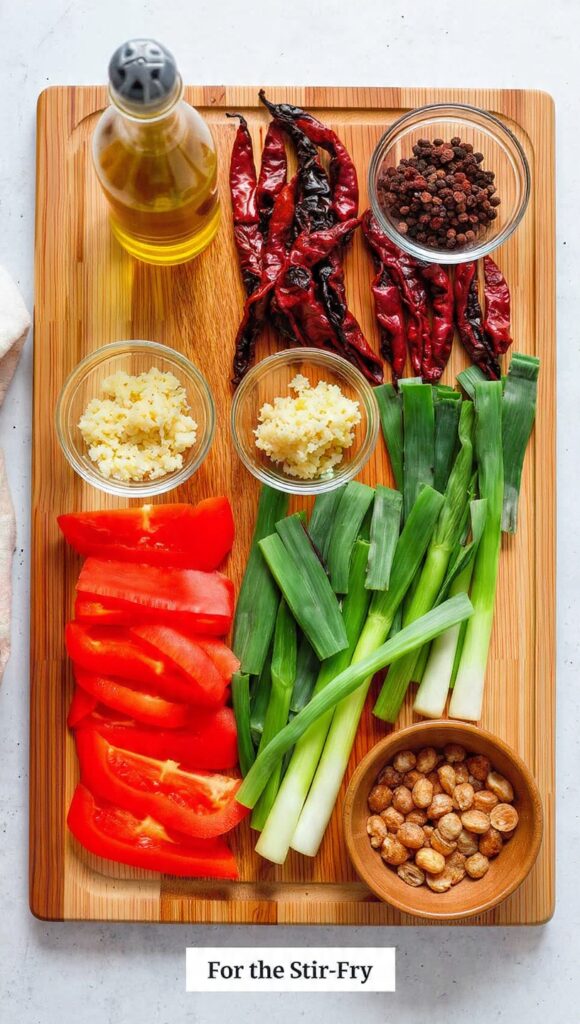
For the Stir-Fry:
- 3 tablespoons vegetable oil
- 8 to 10 dried red chilies (adjust for heat preference)
- 1 tablespoon Sichuan peppercorns
- 4 cloves garlic, minced
- 1 tablespoon fresh ginger, minced
- 1 red bell pepper, cut into 1-inch pieces
- 1 green bell pepper, cut into 1-inch pieces
- 4 scallions, cut into 1-inch pieces
- 1/2 cup roasted peanuts
Instructions
- Marinate the chicken. Mix the chicken pieces with 2 tablespoons soy sauce, Shaoxing wine, and 1 tablespoon cornstarch. Let it sit for 15 minutes while you prep everything else. This helps the chicken stay tender and gives it flavor.
- Make the sauce. Whisk together 3 tablespoons soy sauce, vinegar, hoisin, sugar, cornstarch, and water in a small bowl. Set it aside. Having this ready means you’re not scrambling once the stir-fry starts.
- Toast the Sichuan peppercorns. Heat your wok or large skillet over medium heat. Add the Sichuan peppercorns and toast them for about 1 minute until fragrant. Don’t skip this step. It wakes up the peppercorns and makes them more aromatic. Remove them and set aside.
- Cook the chicken. Crank the heat to high. Add 2 tablespoons of the oil. Once it’s shimmering, add the chicken in a single layer. Let it sear without moving it for 2 minutes, then stir-fry for another 3 to 4 minutes until mostly cooked through. Remove the chicken to a plate.
- Stir-fry the aromatics. Add the remaining tablespoon of oil to the wok. Toss in the dried chilies and Sichuan peppercorns. Stir for about 30 seconds. You’ll smell that signature Sichuan aroma. Then add the garlic and ginger. Stir for another 30 seconds.
- Add the vegetables. Throw in the bell peppers and scallions. Stir-fry for 2 to 3 minutes. You want them to soften slightly but still have crunch.
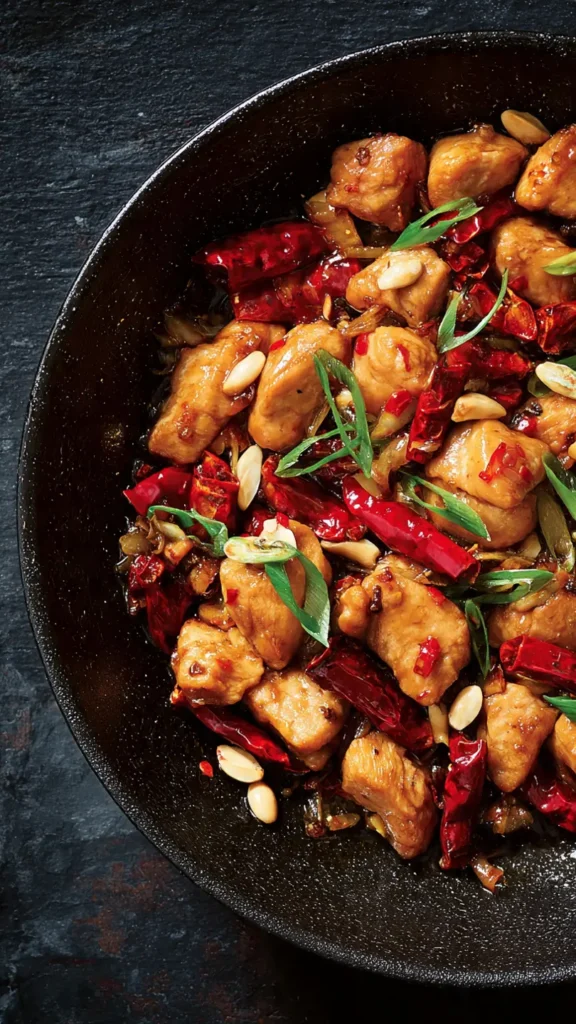
- Bring it together. Return the chicken to the wok. Give the sauce a quick stir (the cornstarch settles) and pour it in. Toss everything together for about 1 minute until the sauce thickens and coats everything.
- Finish with peanuts. Turn off the heat. Stir in the roasted peanuts. Serve immediately over rice.
Notes
About Sichuan Peppercorns: If you can’t find them, the dish is still good, just not authentic. You lose that numbing, tingly sensation. Some people substitute regular black peppercorns, but it’s not the same.
Chicken Thighs vs. Breasts: I strongly prefer thighs. They stay juicier and have more flavor. If you use breasts, be extra careful not to overcook them.
Oil Temperature: High heat is critical for stir-frying. Your wok or pan should be hot enough that the oil is almost smoking. This creates that “wok hei” or breath of the wok – that slightly charred, smoky flavor you get at restaurants.
Dried Chilies: I use about 8 for medium heat. If you want it really spicy, go up to 15. If you have kids, drop it to 3 or 4. You can also remove the seeds from the chilies to tone down the heat.
Peanut Substitutes: Cashews work if someone has a peanut allergy. They’re slightly sweeter and less crunchy, but still good.
For more bold Chinese flavors, check out Chinese Sweet and Sour Chicken or try something completely different like Korean Bibimbap Bowl for another satisfying Asian rice dish.
Kung Pao Chicken
Spicy stir-fry with peanuts, chilies, and savory sauce
Ingredients
For the Chicken Marinade:
- 1.5 lbs boneless, skinless chicken thighs, cut into bite-sized pieces
- 2 tablespoons soy sauce
- 1 tablespoon Shaoxing wine (or dry sherry)
- 1 tablespoon cornstarch
For the Sauce:
- 3 tablespoons soy sauce
- 2 tablespoons Chinese black vinegar (or rice vinegar)
- 1 tablespoon hoisin sauce
- 1 tablespoon sugar
- 1 teaspoon cornstarch
- 2 tablespoons water
For the Stir-Fry:
- 3 tablespoons vegetable oil
- 8-10 dried red chilies (adjust for heat preference)
- 1 tablespoon Sichuan peppercorns
- 4 cloves garlic, minced
- 1 tablespoon fresh ginger, minced
- 1 red bell pepper, cut into 1-inch pieces
- 1 green bell pepper, cut into 1-inch pieces
- 4 scallions, cut into 1-inch pieces
- 1/2 cup roasted peanuts
Instructions
- Marinate the chicken. Mix the chicken pieces with 2 tablespoons soy sauce, Shaoxing wine, and 1 tablespoon cornstarch. Let it sit for 15 minutes while you prep everything else. This helps the chicken stay tender and gives it flavor.
- Make the sauce. Whisk together 3 tablespoons soy sauce, vinegar, hoisin, sugar, cornstarch, and water in a small bowl. Set it aside. Having this ready means you’re not scrambling once the stir-fry starts.
- Toast the Sichuan peppercorns. Heat your wok or large skillet over medium heat. Add the Sichuan peppercorns and toast them for about 1 minute until fragrant. Don’t skip this step. It wakes up the peppercorns and makes them more aromatic. Remove them and set aside.
- Cook the chicken. Crank the heat to high. Add 2 tablespoons of the oil. Once it’s shimmering, add the chicken in a single layer. Let it sear without moving it for 2 minutes, then stir-fry for another 3-4 minutes until mostly cooked through. Remove the chicken to a plate.
- Stir-fry the aromatics. Add the remaining tablespoon of oil to the wok. Toss in the dried chilies and Sichuan peppercorns. Stir for about 30 seconds. You’ll smell that signature Sichuan aroma. Then add the garlic and ginger. Stir for another 30 seconds.
- Add the vegetables. Throw in the bell peppers and scallions. Stir-fry for 2-3 minutes. You want them to soften slightly but still have crunch.
- Bring it together. Return the chicken to the wok. Give the sauce a quick stir (the cornstarch settles) and pour it in. Toss everything together for about 1 minute until the sauce thickens and coats everything.
- Finish with peanuts. Turn off the heat. Stir in the roasted peanuts. Serve immediately over rice.
Nutrition Per Serving
Kitchen Notes
About Sichuan Peppercorns: If you can’t find them, the dish is still good, just not authentic. You lose that numbing, tingly sensation. Some people substitute regular black peppercorns, but it’s not the same.
Chicken Thighs vs. Breasts: I strongly prefer thighs. They stay juicier and have more flavor. If you use breasts, be extra careful not to overcook them.
Oil Temperature: High heat is critical for stir-frying. Your wok or pan should be hot enough that the oil is almost smoking. This creates that “wok hei” or breath of the wok – that slightly charred, smoky flavor you get at restaurants.
Dried Chilies: I use about 8 for medium heat. If you want it really spicy, go up to 15. If you have kids, drop it to 3 or 4. You can also remove the seeds from the chilies to tone down the heat.
Storage: Keep leftovers in an airtight container in the fridge for 3-4 days. Store peanuts separately if possible to maintain crunch. Reheat in a skillet over medium-high heat with a splash of water or broth. Not recommended for freezing.